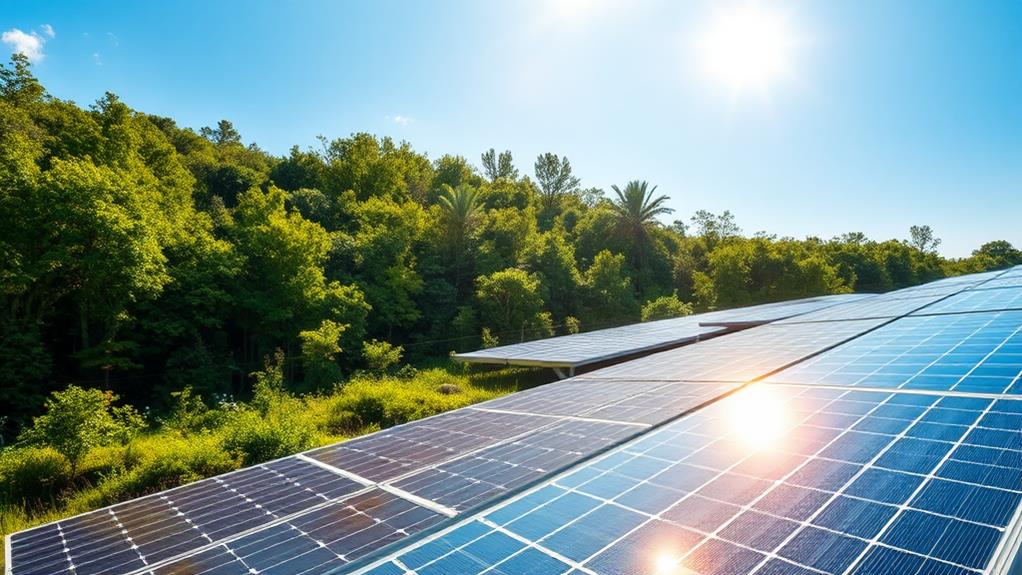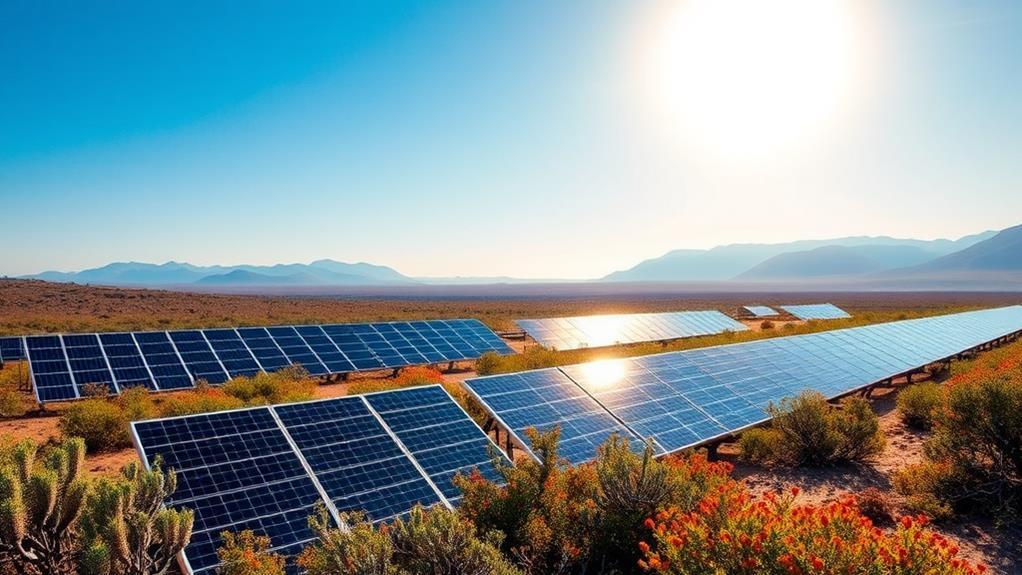


In customizing ground-mounted solar systems, we have many choices to suit your requirements. From flexible base options like driven stakes and ground anchors to a range of mounting setups with materials such as aluminum or galvanized steel, there's a solution for every location. We customize designs for specific landscapes and visual goals, ensuring maximum energy generation with adaptable tilt angles. Thorough site evaluations inform our base and installation approaches, enabling us to address different soil conditions efficiently. The appropriate personalized array layout enhances energy performance by optimizing space. Delve deeper to uncover the ideal match for your project.
Key Takeaways
- Choose from a variety of foundation options like driven piles and concrete footings to suit soil conditions.
- Customize racking configurations with materials like aluminum and steel, and adjustable tilt angles for optimal energy output.
- Tailor designs to site conditions and aesthetic preferences for better integration and efficiency.
- Optimize space and adapt to site constraints with custom array configurations to enhance energy production.
- Use complementary support structures like the Schletter FS Uno system for added stability across diverse terrains.
Ground Mount System Overview
Ground-mounted solar systems are distinguished for their flexibility and scalability, making them suitable for residential and utility-scale projects. These systems range in size from 10 kW for smaller applications to over 1 MW for larger installations, accommodating a variety of energy needs. Their versatility is due in part to a wide array of racking options designed for different site and project requirements.
Before starting a ground-mounted solar project, comprehensive site assessments and geotechnical studies are crucial. These steps ensure that the most appropriate system is chosen for the specific conditions of the site. Typically, solar arrays are supported by durable materials such as galvanised steel and aluminium, which provide both strength and longevity to the installations.
Foundation options are integral to the success of any ground-mounted solar project. Understanding the significance of these components ensures that solar installations are effective and sustainable.
For example, the Schletter FS Uno system is known for its robust design and adaptability to various ground conditions, making it a reliable choice for many projects.
Harnessing solar energy requires careful consideration of all components involved. Selecting suitable materials and systems guarantees the effectiveness and sustainability of solar efforts.
Foundation Options
Let's investigate the different foundation choices available for ground-mounted systems, focusing on their installation methods and soil suitability.
We can select from:
- driven piles
- helical piles
- ground screws
- concrete footings
- ballasted foundations
Each provides distinct advantages depending on the soil conditions. By grasping these options, we'll be better prepared to choose the appropriate foundation for our specific project requirements.
Types of Foundations
Selecting the appropriate foundation is crucial for the stability and efficiency of ground-mounted solar panel systems. Understanding the base options available according to ground and soil conditions is important.
Driven piles, made from galvanised steel, are an excellent choice for larger projects where the soil has good cohesion. They penetrate deeply into the earth, providing sturdy support.
In cases where the soil is sandy and lacks cohesion, helical piles are recommended. Consisting of split discs that screw into the ground, they offer a secure grip.
For those dealing with rocky or dense refusal conditions, ground screws are ideal. Their robust steel posts and threaded design make them effective in challenging terrains.
For smaller installations, concrete footings are suitable. While they require some excavation and concrete handling, they provide proven reliability.
As an alternative where the terrain limits anchoring methods, ballasted foundations rely on weight rather than soil penetration. Choosing the appropriate base ensures solar projects remain stable and perform optimally.
Installation Methodologies
Having examined the different types of foundations available for ground-mounted solar panel systems, attention now turns to the installation methods that ensure their effectiveness. Each method possesses its unique strengths, aiding in informed decision-making that fosters a sense of accomplishment and unity among our community of solar enthusiasts.
For larger projects requiring ground mounts, driven piles provide a robust solution. Their galvanised steel construction suits situations where soil conditions are tenacious.
Helical piles are ideal in sandy soils with low adhesion. The split discs of helical piles contribute to stability in less cohesive environments.
In rocky or dense refusal conditions, ground screws stand as the preferred choice. These large steel posts with threads easily navigate challenging terrain, guaranteeing a secure foundation for solar panels.
Concrete footings, in contrast, are a traditional option, particularly for smaller installations. Although they demand more manual labour, such as digging and aligning posts, their reliability is unmatched.
Each installation method plays an essential role in ensuring ground-mounted systems are stable, efficient, and ready to harness solar power. Let's forge a solar future together!
Soil Suitability Factors
Understanding soil suitability is crucial when selecting the appropriate foundation for ground-mounted solar panels. Considering soil type, load-bearing capacity, and other critical factors ensures our solar arrays remain stable and efficient. This knowledge connects us to the land, enabling informed choices that benefit both our projects and the environment.
Different soil types present unique challenges and opportunities for foundation options. Sandy soils may necessitate driven piles, whereas clay-rich areas might be more suited to helical piles or ground screws. Each option addresses varying load-bearing capacities, ensuring secure and robust installations. As a community committed to sustainability, geotechnical studies can assess these soil properties and guide foundation decisions.
For instance, sandy soil conditions often require the use of products like the Krinner Ground Screw, which provides stability in loose substrates.
In contrast, clay-rich terrains might benefit from the application of helical piles, such as those offered by GoliathTech, known for their adaptability and strength. These choices ensure that solar installations are both durable and environmentally respectful, aligning with our sustainable goals.
Racking Configurations
As we investigate racking configurations, we'll notice that the flexibility of installation options provides options for different site conditions and project requirements.
Whether we opt for single or double post foundations, we can select materials that best suit our needs and environmental factors.
Moreover, adjusting tilt angles allows us to optimize energy capture, making our ground-mounted system both efficient and adaptable.
Versatile Installation Options
When planning a ground-mounted solar system, a variety of flexible installation options are available due to different racking configurations. The advantage of a Ground Mount System is its versatility; whether opting for a Single Pole or a custom design, the possibilities are extensive.
Single pole configurations cater to those seeking simplicity and minimal land disruption. Custom designs can be tailored to specific site conditions, ensuring optimal performance and a harmonious integration within the chosen environment.
Various foundation geometries, like single or double post setups, offer flexibility in layout and support for solar arrays. These setups can be enhanced with adjustable tilt angles, tracking systems, or hybrid options, optimising energy production and aligning with unique project needs.
Customising racking configurations optimises space utilisation and energy output, ensuring the solar system performs at its best. For instance, the Schletter FS Uno racking system is ideal for projects requiring adjustable tilt angles.
Selecting the right system supports a communal vision in achieving energy goals and fostering unity in renewable energy pursuits. The Renusol Console+ is another excellent choice for those wishing to maximise space without compromising on energy efficiency.
Material Selection Flexibility
When considering material selection flexibility for ground-mounted solar systems, racking configurations offer numerous options. We can examine the diverse materials available to ensure your system is robust and tailored to your unique requirements. High-strength aluminium alloy is often used for its durability and lightweight properties. It's popular within our community for its corrosion resistance and ease of handling.
Depending on specific site demands, ground screws or concrete ballast foundations may be used. Ground screws provide a versatile and efficient solution, particularly in challenging soil conditions. Concrete ballast offers stability without the need for deep ground penetration. These options equip us to handle different terrains and site challenges, aligning with our goal of efficient energy production.
Pre-assembled parts, expertly crafted at the factory, are prepared for installation, ensuring a swift and straightforward setup. Whether stacking modules or integrating them into existing structures, the flexibility in material choice and configuration helps turn our vision into reality. This approach fosters a sense of belonging in our renewable energy journey.
Adjustable Tilt Angles
Adjustable tilt angles in ground-mounted solar systems are essential for optimising panel performance. Fine-tuning the angle ensures maximum sunlight capture throughout the year. Adjustable tilt angles, typically ranging from 5 to 60 degrees, allow personalisation based on geographical location, seasonal sun angles, and specific energy production goals. This customisation fosters a community that values efficiency and sustainability.
Solar systems should perform at their best, and different tilt angles enhance energy production during different seasons. Adjusting the angles maximises system efficiency when it matters most. Customisable tilt angles address concerns like shading, snow accumulation, and unique energy needs. This adaptability enables systems to thrive in changing environmental conditions.
Incorporating adjustable tilt angles into ground-mounted systems empowers optimisation of solar panel performance. Taking pride in maximising renewable energy resources contributes to a more sustainable future. Embracing this customisation makes solar solutions truly shine.
Site Assessment Factors
Conducting a comprehensive site assessment is essential for ensuring the success of a ground-mounted solar system. Acknowledging the importance of understanding the land beneath us is fundamental to our solar projects. Site assessment factors, such as soil properties, are crucial in designing a system that endures over time. Geotechnical studies are indispensable; they help determine the type of foundation required, directly affecting the system's stability and efficiency.
Evaluating these factors significantly reduces construction risks and optimises the performance of solar installations. The aim isn't just to construct solar arrays but to create a lasting positive impact on our environment and community. Environmental conditions also need consideration to ensure the stability and longevity of solar arrays. The shared objective is to harness solar energy in the most reliable way possible.
Joining our efforts means becoming part of a community dedicated to renewable energy solutions. Together, we maximise potential by tailoring each project to its unique location, ensuring our collective energy investments are both intelligent and sustainable. For instance, using products like the SolarEdge Inverter can enhance system efficiency, making it a suitable choice for many solar projects.
Custom Design Solutions
Custom design solutions hold significant importance in the field of ground-mounted solar systems. These solutions allow adjustments to specific site conditions while reflecting individual aesthetic preferences, making solar installations unique.
Whether dealing with undulating landscapes or a scenic garden, custom designs enable systems to blend seamlessly with the surrounding environment, enhancing visual charm. Selecting distinctive configurations and layouts optimises energy production while respecting the natural beauty of the land.
Tailored designs excel in challenging terrains or overcoming obstacles. They accommodate everything from rocky foundations to sloping hillsides, ensuring systems are securely mounted and effectively installed. Such solutions empower individuals to address site-specific hurdles without compromising performance or appearance.
Custom ground-mounted systems offer flexibility concerning array orientation and tilt angles. Maximising sun exposure enhances energy efficiency, ensuring the solar investment delivers optimal returns. Embracing these custom design solutions allows for crafting a solar setup that meets energy needs while aligning with one's vision, fostering a connection with both the environment and community.
The Renogy Ground-Mount Solar Kit is an excellent choice for those looking for a versatile and efficient system, suitable for varied landscapes, without compromising on quality or functionality.
Material Considerations
In considering materials for ground-mounted solar systems, choosing the right components ensures durability and performance. High-strength materials such as aluminium alloy, HDG steel, and anti-corrosion SUS304 are essential. These materials withstand harsh environmental conditions and provide robust support for solar panels over time. Opting for pre-assembled materials from the factory can streamline the process, reducing installation time and associated costs.
Tailored designs accommodate diverse installation conditions, ensuring optimal performance and longevity. Tilted angles range from 5 to 60 degrees, with foundation options like piling available. Concrete foundations offer stability, particularly in varied soil conditions. They ensure solar systems are firmly rooted and supported.
For example, the use of Galvanised Steel Mounting Structures is recommended for their resilience against corrosion and their ability to support heavy loads.
Alternatively, Aluminium Alloy Frames are a lightweight option that offers excellent durability. Each choice is crucial for efficient sun exposure and energy production, enhancing the overall effectiveness of the solar system.
Installation Techniques
Installation methods require careful consideration of both the foundation and approach, as these are as crucial as the materials chosen. Ground conditions at each location significantly influence the installation method that will best support a solar project. Options such as driven piles, helical piles, ground screws, concrete footings, and ballasted foundations allow for a tailored approach to suit the unique environment of a site.
Foundation types like single post, double post, and cantilevered designs provide varying levels of stability and durability for mounted arrays. Pre-engineered systems might work well for simpler projects, while custom solutions are ideal when sites present challenging terrains or specific conditions. Collaborating with manufacturers including AET, IronRidge, and Unirac provides access to bespoke options, ensuring project success despite potential obstacles.
Thorough geotechnical studies are essential to understand the soil properties and environmental conditions encountered. These studies guide decisions, aiding in the selection of the most suitable foundation type. As we embark on our solar endeavour, the shared goal remains a secure, effective, and enduring installation.
Performance Optimization
Optimising energy output is essential for any solar project. Enhancing performance is key to achieving this goal. We can improve our solar panels' efficiency through customisation of various aspects of our ground-mounted systems.
Custom tilt angles are crucial for aligning solar panels with seasonal sun angles, ensuring panels capture the maximum possible sunlight throughout the year.
Tracking systems further enhance performance. Solar panels can follow the sun's path, ensuring optimal exposure and energy production. If a fully tracking system isn't feasible, hybrid systems present a flexible alternative. These systems blend fixed and tracking elements, balancing efficiency and practicality.
Custom array configurations optimise available space and adapt to site constraints, ensuring no potential is wasted. Support structures should complement these configurations, providing stability and alignment. The Schletter FS Uno ground mount system is a popular choice for its robust design and adaptability to various site conditions.
Conclusion
At Deo Solar, we focus on key areas when considering ground-mounted systems: foundation choices, racking configurations, and site assessments. By customising these elements, we can craft solutions that meet your specific needs. Choosing the right materials and installation techniques is crucial for boosting performance. Our goal is to ensure your system is efficient, durable, and perfectly suited to your location. Let's work together to create a solar installation that maximises energy production and return on investment.
If you have any questions or need more information about our products, such as Rail-Less Solar Brackets, End Spacers, Structural Brackets, Ground Mounted Solar Systems, Corrugated Brackets, and Earthing Plates, please reach out to us. We also offer services like the DeoSizer Tool, Evaluation and Design, Maintenance and Support, and Solar Installations. Feel free to contact us at Deo Solar. We're here to help!