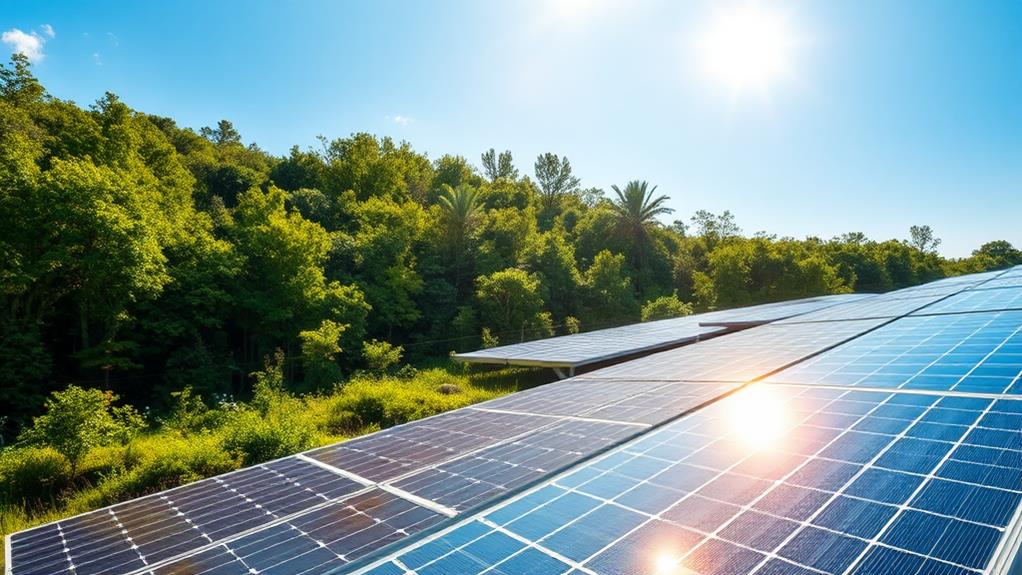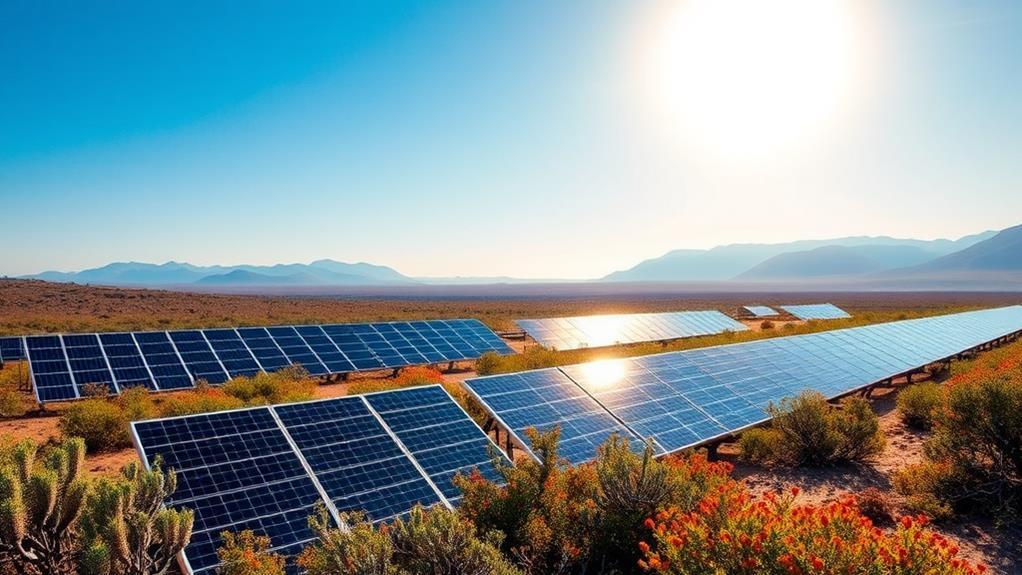


When we carry out a site evaluation for ground-mounted installations, we concentrate on soil conditions, sunlight exposure, and shading impacts. Soil drainage is crucial for ensuring the panels' foundation remains stable, so we conduct soil tests to evaluate this. Sunlight exposure is essential; we use tools like solar pathfinders to optimize energy output by analyzing shadows and determining the best panel orientation. Considering factors like soil composition and slope helps us determine the ideal panel placement. Finally, we review the site's electrical infrastructure to confirm it can support the system. By examining each aspect, we pave the way for successful solar installations.
Key Takeaways
- Conduct soil tests to evaluate drainage, composition, and load-bearing capacity for stable solar panel foundations.
- Assess sunlight exposure using tools like solar pathfinders for optimal panel placement and energy production.
- Perform shading impact analysis to identify potential obstacles and ensure maximum solar efficiency.
- Analyze topography and land contours to guide optimal solar panel placement and energy production.
- Evaluate electrical infrastructure capacity to handle solar system output and prevent overloading.
Evaluating Site Conditions
When assessing site conditions for ground-mounted solar installations, several factors must be considered to ensure optimal performance. Our community values shared knowledge and collaboration, working together to help every solar project reach its full potential.
Soil drainage is of utmost importance for the stability of solar panel foundations. Conducting soil tests identifies the composition and drainage capabilities, ensuring the ground can support the installation effectively. For example, using a soil permeability test kit can provide insights into drainage suitability.
Sun orientation is another critical aspect. The alignment of solar panels directly impacts the energy harnessed. Analysing the sun's path across the site helps determine the best orientation for maximum exposure throughout the day. This reduces shading from nearby structures or natural obstructions, optimising energy production. Products like the Solmetric SunEye can assist in evaluating sun paths and potential shading.
Understanding the slope of the site is crucial. A suitable slope aids proper sun orientation and prevents water pooling, which could affect soil drainage. Addressing these factors collectively lays the groundwork for efficient energy generation and long-term success.
Together, we can develop solar solutions that power our communities, fostering a sense of belonging and sustainability.
Importance of Solar Resource
When evaluating a site for ground-mounted solar installations, we must initially evaluate the amount of sunlight exposure to maximize energy production.
By analyzing the impact of shading from nearby structures or vegetation, we can identify the best areas for placing solar panels.
This thorough evaluation not only helps in optimal panel placement but also optimizes our investment by guaranteeing high energy output.
Evaluating Sunlight Exposure
Evaluating the solar resource at a potential site is crucial for the success of ground-mounted solar installations. Assessing sunlight exposure lays the foundation for maximising energy output. Sunlight optimisation ensures solar panels are positioned to capture the most sunlight possible, significantly enhancing solar efficiency. Tools like solar pathfinders are invaluable, allowing analysis of sunlight exposure throughout the day and guiding the best panel placement.
Understanding the solar resource involves making informed decisions that benefit both community and environment. Evaluating sun exposure considers the sun's path while committing to sustainable and efficient energy solutions. This assessment connects with individuals who value innovation and aim for a greener future.
For specific tools, the Solmetric SunEye is a recommended device. It provides precise analysis of shading and sunlight exposure, ensuring optimal panel positioning.
Another option is the Solar Pathfinder, known for its accuracy in determining potential shading issues.
Shading Impact Analysis
Understanding the shading impact is crucial when planning a solar installation. Shading impact analysis evaluates how obstacles such as trees or buildings affect solar energy production. Knowing how much sunlight reaches the solar panels ensures maximum efficiency. Each ray of sunlight contributes to generating clean energy.
Shading can significantly reduce energy generation. Without proper analysis, systems may underperform and fail to meet expectations. Conducting thorough shading analysis identifies shading patterns throughout the day and across different seasons. This insight is essential for accurate site assessments and helps design solar installations that are effective and tailored to specific locations.
To optimise solar panel efficiency, use tools like the Solar Pathfinder, which provides accurate data on shading.
Advanced software like PVsyst can simulate energy production and assess shading impacts. It's important to choose products that offer high efficiency and are designed to withstand local weather conditions. Solar panels from reputable brands such as SunPower or LG provide reliable performance.
Optimal Panel Placement
After conducting a detailed shading impact analysis, we can now focus on harnessing the available solar resource through optimal panel placement. Correct positioning of panels is essential to maximise output and ensure the system operates efficiently. This informed approach aligns with our shared goal of sustainable energy production.
Orienting panels southward is crucial for capturing the maximum sunlight throughout the day. This direction is key for optimal solar radiation absorption, which enhances energy output. It's important to consider the sun's trajectory across the sky, tracking movements to determine the best tilt and angle for the panels. This strategy ensures panels are always in the ideal position to absorb the maximum available solar energy.
The earlier shading analysis highlights potential obstructions. Panels should be placed based on this analysis and the solar resource assessment to avoid areas that may block sunlight. This careful planning and placement are vital for maximising output and ensuring the solar installation meets our aspirations for a clean energy future.
Product recommendations to consider include the Trina Solar Vertex S+ series, known for its high efficiency and robust design.
Shading and Obstruction Analysis
When conducting a shading and obstruction analysis for ground-mounted solar installations, assessing the impact of potential sunlight blockers like trees, buildings, and other structures is crucial. Understanding how these elements influence sunlight exposure allows us to employ shading optimisation techniques that ensure our solar panels capture the maximum sunlight possible. The aim is to strategically position the panels to avoid shade while integrating seamlessly within the environment, enhancing both energy efficiency and the site's aesthetics.
Obstruction mitigation is vital in this process. Early identification of potential shading sources enables us to address them proactively, preventing any compromise to the system's performance. We meticulously analyse shading patterns to determine when and where obstructions might cast shadows, potentially reducing energy production efficiency. This minimises performance issues and enhances the effectiveness of our ground-mounted solar systems.
Our installations aim to meet energy needs while fostering community and sustainability. Precise shading and obstruction analysis helps create systems that blend seamlessly into shared spaces, maximising energy output for all. For instance, using solar panels like the Trina Solar Vertex S series, known for their high efficiency and durability, can further enhance the system's performance.
Soil and Topography Considerations
As we assess potential sites for ground-mounted installations, grasping soil stability is pivotal because sandy soil won't offer the same anchoring as clay or loam.
We also need to take into account how the terrain affects panel orientation and support, especially since sloped areas might necessitate more intricate foundation work.
Soil Stability Assessment
Assessing soil stability is crucial for ensuring the durability and safety of ground-mounted solar installations. When evaluating the soil, we're not simply examining its type and texture. It's essential to understand its capability to provide foundational support and manage the load capacity necessary to keep the solar arrays secure and operational over time. Soil compaction and drainage are critical factors, significantly affecting the stability and longevity of installations.
Comprehensive soil testing helps determine the load-bearing capacity required for designing robust mounting structures. This guarantees that solar panels endure environmental stresses and maintain performance throughout their lifespan. Collaboration facilitates informed decisions, contributing to successful and enduring solar projects.
Topography is also influential, guiding the selection of optimal locations for panel placement. Understanding the land's contours aids in optimising energy production.
Considering both soil and topography results in installations that harmonise with the land and benefit all stakeholders.
Terrain Impact Analysis
Numerous factors influence terrain impact analysis for ground-mounted solar installations. Soil and topography are essential considerations. Soil composition significantly affects foundation stability. Sandy soils provide excellent drainage and are often advantageous. In contrast, clay soils present challenges and require special attention during drainage assessments to prevent water retention, which could jeopardise the foundation.
Topography requires equal attention. Slope analysis aids in determining how the land's incline impacts panel orientation and installation processes. Flat terrain eases construction, reducing time and effort. Sloped or uneven terrains might necessitate grading or terracing to ensure panels receive optimal sunlight. These modifications, although potentially expensive, are crucial for optimising system performance.
Conducting soil testing determines the load-bearing capacity, ensuring racking systems remain structurally sound. For terrains with considerable slopes, adjustable racking systems, such as those from Schletter, might be essential to accommodate varying heights and angles. Addressing these factors results in efficient, durable solar installations, underscoring our commitment to a sustainable future.
Electrical Infrastructure Assessment
Prior to the installation of ground-mounted solar systems, it's crucial to conduct a comprehensive assessment of the electrical infrastructure to confirm its capacity to handle the system's output. This step ensures seamless integration without the risk of overloading existing setups.
We begin with checking voltage compatibility, ensuring that the voltage supply matches the requirements of the solar system. This prevents potential mismatches that might lead to inefficiencies or system failures. For example, using a Fronius inverter can help in achieving optimal voltage compatibility.
Next, the circuit capacity is evaluated. It's vital to ensure that the electrical circuits can accommodate the additional load introduced by solar energy. Our assessment might indicate the need for an upgrade, such as in 2020 when 38% of customers required electrical panel improvements.
Addressing circuit capacity prevents electrical issues and facilitates a smooth transition to solar energy. For instance, the Hager 125A series is recommended for robust circuit management.
Utilizing Advanced Technology
With the electrical infrastructure ready, we focus on the advantages of advanced technology in optimising ground-mounted solar installations. Technology streamlines the site assessment process. Tools such as drones and 3D modelling software enhance efficiency and strengthen our community's engagement with sustainable energy solutions.
Drones capture high-resolution images for precise topographic analysis. This mapping ensures accurate terrain assessment, identifying optimal spots for solar panel placement. They evaluate shading, sun exposure, and terrain conditions with impressive accuracy, ensuring solar systems are designed for peak performance. Consider the DJI Phantom 4 Pro, known for its high-resolution camera and reliable performance in capturing detailed aerial images.
3D modelling tools offer detailed representations of ground features. These models help optimise panel placement, reducing errors and boosting system performance. Mistake minimisation accelerates the assessment process, making projects more efficient and cost-effective. AutoCAD Civil 3D is an excellent choice for creating detailed and accurate models, enhancing project planning and execution.
Integrating these advanced technologies into assessments strengthens our commitment to a sustainable future. It fosters a sense of belonging in a community dedicated to renewable energy and environmental stewardship.
Professional Assistance Benefits
Engaging professional assistance for our ground-mounted solar projects ensures a comprehensive assessment of potential sites. Collaborating with experts provides us with a wealth of knowledge that ensures each site is evaluated for its unique conditions. This leads to savings on costs by optimising system size and placement, while also improving our installation efficiency. Being part of a community that values wise investments is important, and opting for professional guidance supports this goal.
Navigating the permitting processes and local regulations can be complex. Experienced professionals guarantee compliance, significantly reducing the risk of costly installation errors. This approach means we're not just installing solar systems; we're building a more sustainable future with confidence and precision.
Working with experts enhances the overall performance of our solar installations. Their insights and recommendations ensure our systems run optimally, providing reliable energy and strengthening our commitment to environmental responsibility. Products like the SMA Sunny Boy inverter and Trina Solar panels are great choices for efficient solar projects.
Let's leverage the benefits of professional assistance and collaborate towards successful, efficient solar projects that bring us all closer as a community.
Conclusion
During our site evaluations for ground-mounted solar installations, we focus on key elements such as site conditions, solar resources, and shading analysis. We examine soil quality and landscape, look into electrical infrastructure, and use cutting-edge technology. By understanding these factors, we ensure our projects perform efficiently.
It's important to seek professional guidance in these complex areas. At Deo Solar, we encourage you to reach out if you have any questions about our products, including Rail-Less Solar Brackets, End Spacers, Structural Brackets, Ground Mounted Solar Systems, Corrugated Brackets, and Earthing Plates. We also offer services like the DeoSizer Tool, Evaluation and Design, Maintenance and Support, and Solar Installations. Contact us to make informed decisions for successful and environmentally friendly solar projects.