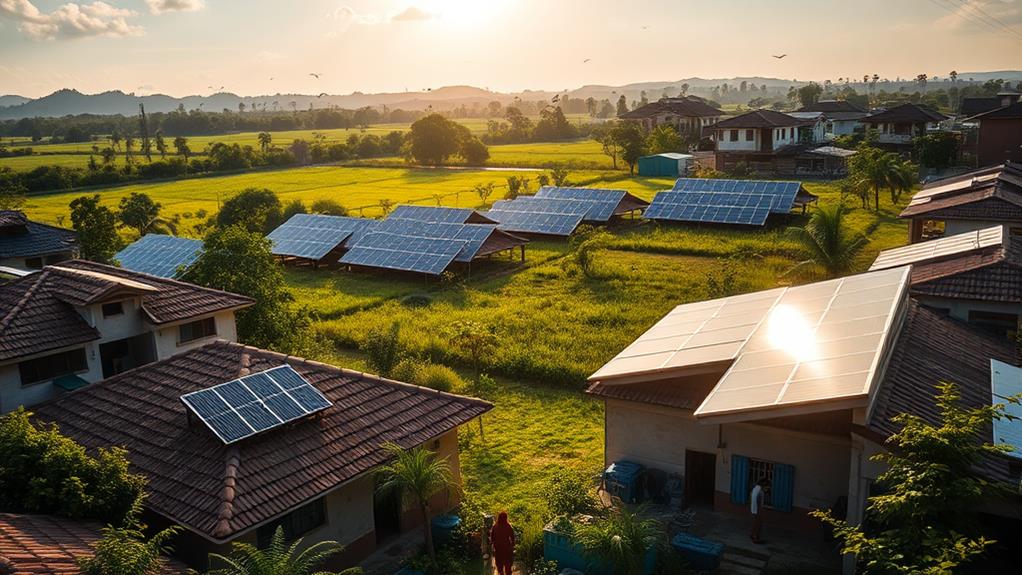


As we accelerate the transition to a low-carbon economy, enhancing local manufacturing of solar products is vital.
By supporting local manufacturing, we create jobs, stimulate local economies, and reduce our reliance on imported fossil fuels. Governments can implement policies to incentivise domestic manufacturing, attracting foreign direct investment and creating employment opportunities.
Investing in vocational training programmes develops a skilled workforce, and partnering with industry stakeholders designs training programmes catering to sector-specific needs.
By adopting eco-friendly supply chain practices, we can minimise the solar industry's carbon footprint. As we examine the benefits of localised production systems, we'll uncover how to strengthen our energy security and competitiveness globally.
Supporting Economic Growth Locally
As we endeavour to enhance solar products, fostering economic growth at the local level is vital.
Governments worldwide are implementing measures to incentivise domestic manufacturing, thereby creating employment opportunities.
For instance, Australia's government has launched a $1 billion Solar Sunshot programme to stimulate local solar module manufacturing. Similarly, India's Ministry of Power has introduced a green hydrogen policy, which provides a single-window clearance system, land allotment, and priority access to the inter-state transmission network.
By supporting local manufacturing, we can generate employment opportunities and stimulate local economies, particularly in rural areas where development often lags behind.
In Africa, cultivating a renewables manufacturing base could have a profound impact on sustainable development, creating conducive conditions for growth and acceptance of clean technology.
The Nigerian Electrification Project, which emphasizes the development of local manufacturing capabilities for renewable energy technologies, is a prime example of this.
Reducing Carbon Footprint Effectively
As we continue to enhance solar products, we're committed to reducing our carbon footprint effectively.
We're aware that's vital for a sustainable future, and we're tackling it from two angles: reducing greenhouse gas emissions and creating eco-friendly supply chains.
Greenhouse Gas Reduction
Substantially reducing our carbon footprint is crucial in the fight against climate change, and green hydrogen offers a promising solution to decarbonize hard-to-abate sectors like fertilizer manufacturing and oil refining.
The implementation of effective carbon pricing and emission standards will play a vital role in reducing greenhouse gas emissions as we transition towards a more sustainable future.
With the cost of green hydrogen predicted to fall dramatically by 2030, investing in this clean energy source is a shrewd move. Companies such as NTPC, Indian Oil Corporation, and Reliance are already investing heavily in green hydrogen production, which is expected to make a significant contribution to reducing India's carbon footprint.
As the levelized cost of energy from solar PV continues to decrease, green hydrogen production will become even more cost-effective, making it an attractive alternative to fossil fuels.
Eco-Friendly Supply Chains
By adopting eco-friendly supply chain practices, the solar industry can significantly mitigate its carbon footprint, which is crucial given its rapid growth and escalating environmental impact.
As the industry expands its local manufacturing capabilities, prioritising eco-friendliness in supply chains is vital to reduce its ecological impact.
To achieve this, several key strategies can be employed:
Enhanced Supply Chain Visibility: Increasing transparency in supply chains enables the identification of areas for improvement, facilitating data-driven decisions that reduce the carbon footprint. For instance, implementing digital tools like blockchain technology can enhance traceability and accountability throughout the supply chain.
Closed-Loop Material Management: Implementing circular economy principles can significantly reduce waste and emissions in supply chains, making solar products more sustainable. This can be achieved by designing products for recyclability, reusing materials, and recycling waste.
Proximity Sourcing: Sourcing materials locally can substantially reduce transportation emissions, making supply chains more eco-friendly. For example, sourcing silicon wafers from regional suppliers can reduce logistics-related emissions by up to 70%.
Strengthening Energy Security Nationally
As we shift our focus to strengthening energy security nationally, we're excited to examine the key benefits that come with it.
By enhancing our domestic solar industry, we're not only reducing our reliance on imports but also making strides towards energy independence, which is vital for our national grid's resilience.
Now, let's take a closer look at how we can achieve self-sufficiency targets and create a more secure energy future for our nation.
Energy Independence Gains
India's pursuit of energy independence necessitates a radical reduction in its reliance on imported fossil fuels. A robust policy framework and infrastructure development are pivotal in achieving this goal.
To expedite the transition towards energy independence, three key strategies can be employed:
- Enduring policy stability: The government must provide long-term incentives and stability to instil confidence in developers and investors, thereby fostering the growth of the green hydrogen industry. This stability is crucial, as it will enable the sector to flourish and make a significant impact on the country's energy landscape.
- Cost reduction: A drastic reduction in the cost of green hydrogen is essential to make it a viable alternative to fossil fuels, thereby strengthening national energy security. This can be achieved through investments in research and development, as well as economies of scale.
- Industry synergy: Collaboration between key players, such as NTPC, Indian Oil Corporation, Reliance, Adani, and JSW, is vital in creating a thriving green hydrogen economy in India. This synergy won't only contribute to strengthening energy security but also reduce the country's reliance on imports.
National Grid Resilience
Our national grid resilience is crucial to ensuring energy security, particularly amidst global tensions and supply chain disruptions.
As we endeavour to increase our domestic generation from renewable sources, it's imperative that our grid can effectively handle the influx of clean energy. The reliability of our grid is paramount, and compromising on network stability isn't an option.
The current state of our energy security is precarious, and the risks are all too apparent. The Russian invasion of Ukraine has exposed the vulnerabilities of our energy supply chain, underscoring the importance of domestic manufacturing.
By investing in our manufacturing capabilities, we can reduce our reliance on imports, eliminate delays, and minimise our carbon footprint. For instance, investing in UK-based manufacturing of wind turbines could reduce our reliance on imports by up to 50%.
To take control of our energy future, we must prioritise a resilient grid that can support our renewable ambitions.
This requires prioritising research and development to improve manufacturing efficiency and reduce costs. By doing so, we can strengthen our energy security, reduce our reliance on imports, and create a more sustainable energy system for generations to come.
For example, investing in advanced materials and smart grid technologies can improve grid resilience and reduce energy losses.
Self-Sufficiency Targets
To bolster national energy security, setting ambitious self-sufficiency targets is crucial.
India's bold plan to produce 300 gigawatts of solar power by 2030 is a significant step forward. This solar roadmap won't only reduce our reliance on imported solar panels but also foster a thriving domestic industry, generating employment opportunities for thousands of people.
To achieve this goal, we must substantially increase our solar manufacturing capacity, which currently stands at a mere 3 gigawatts.
The government's Production Linked Incentive (PLI) scheme is a welcome move, aiming to increase capacity to 10 gigawatts by 2025. This won't only reduce our dependence on imported panels but also attract investments worth lakhs of crores, thereby boosting the economy.
Ramping up our solar manufacturing capacity is essential to meet the 300-gigawatt target. The PLI scheme will attract significant investments and generate substantial employment opportunities.
Reducing dependence on imported solar panels is critical for ensuring energy security, as it will mitigate the risks associated with reliance on foreign supplies and enhance our energy autonomy.
Benefits of Localized Production Systems
By adopting a decentralised manufacturing and assembly approach, we can create solar products that cater to regional specifications and regulations, thereby reducing logistics costs and environmental impact.
This method enables us to better serve local communities, fostering community engagement and driving economic growth. We can transfer technology and expertise to regional partners, promoting self-sufficiency and creating jobs.
For instance, by partnering with local suppliers, we can reduce reliance on international shipping, leading to a significant decrease in carbon emissions.
Localized production systems also allow us to respond quickly to regional market demands, ensuring that our products meet the unique needs of each area.
By producing closer to our customers, we reduce transportation emissions and minimise waste. For example, our solar panels designed specifically for the African market are tailored to withstand the region's intense sunlight, providing a more efficient and reliable source of energy.
By embracing localised production, we not only enhance our bottom line but also make a positive impact on the environment and the communities we serve.
This approach helps us achieve our sustainability goals while ensuring that our products are more affordable and accessible to those who need them.
Overcoming Supply Chain Challenges
As we navigate the complex landscape of solar product development, we're faced with the harsh reality of supply chain challenges.
We've all seen how material sourcing obstacles and logistics and shipping woes can bring even the most promising projects to a grinding halt.
It's time for us to tackle these challenges head-on and find cutting-edge answers to get our solar products back on track.
Material Sourcing Obstacles
The solar industry faces significant material sourcing obstacles, where securing a stable supply of critical components, such as polysilicon and silver, is vital to meeting growing demand.
The rapid growth of the solar industry has put immense pressure on the supply chain, and addressing these challenges is crucial to maintaining a stable flow of raw materials.
Some of the key material sourcing obstacles we're facing include:
Raw material scarcity: The surge in solar panel demand has led to a critical shortage of essential raw materials, causing supply disruptions and driving up costs. For instance, the limited availability of polysilicon has resulted in production delays and increased expenditure.
Supply chain complexities: The solar supply chain is intricate, comprising multiple tiers of suppliers, making it challenging to track and manage material sourcing. This complexity can lead to delays and inefficiencies, ultimately affecting the quality of the final product.
Geopolitical risks: Trade tensions and geopolitical instability can disrupt the supply of critical materials, further exacerbating the sourcing challenges. For example, the ongoing trade war between the US and China has affected the import of critical solar panel components, such as solar glass and inverters.
Logistics and Shipping
Frequently, logistical hurdles and shipping challenges hinder the efficient transportation of solar panels and components, further exacerbating the supply chain woes.
We've witnessed it firsthand – surging shipping costs, including a six-fold increase in the cost of a shipping container, have made it difficult to obtain the necessary materials.
This is why we believe that local manufacturing is crucial in overcoming these challenges. By producing solar panels and components domestically, we can eliminate import delays, additional transport fees, and supply chain issues.
It's not just about cost savings, though – it's also about reducing our carbon footprint. Take Solarport Systems, for instance, which has taken the lead by opening new manufacturing facilities in the UK.
By doing so, they're reducing their reliance on imports and minimizing transportation costs. This is a step in the right direction, and we hope to see more companies following suit.
Creating Jobs Through Manufacturing
By investing in the manufacturing of solar products, we can generate a significant number of jobs across various sectors, including production, assembly, quality control, and distribution. This not only boosts the local economy but also provides opportunities for individuals to acquire new skills and advance their careers.
To cultivate a skilled workforce, it's crucial to focus on the following initiatives:
Factory Training: Implementing on-site training programmes that equip employees with the necessary skills to manufacture high-quality solar products. For instance, these programmes can include training on the assembly of solar panels and the installation of inverters.
Industry Partnerships: Collaborating with industry leaders and educational institutions to develop customized training programmes that address the specific needs of the solar industry. This can involve partnering with leading solar panel manufacturers, such as Trina Solar or Jinko Solar, to provide employees with hands-on experience.
Apprenticeships: Offering apprenticeships that allow individuals to gain practical experience and develop a deep understanding of the manufacturing process. This can include apprenticeships in areas such as electrical engineering or renewable energy engineering.
Boosting Local Content Requirements
Boosting Local Content Requirements
Accelerating the growth of the solar industry necessitates the implementation of increased local content requirements, ensuring a significant percentage of solar products are manufactured domestically.
This approach is crucial as it fosters a thriving solar manufacturing sector, which in turn benefits the local economy.
To achieve this, it's essential to develop policy frameworks that incentivize local production. This can be achieved by offering regulatory incentives to manufacturers who meet specific local content thresholds.
For instance, offering tax breaks or subsidies to companies that source at least 50% of their materials from local suppliers would stimulate local manufacturing and create new job opportunities.
This strategy not only enhances local manufacturing but also stimulates economic growth and job creation.
By creating a favorable business environment, we can attract more investment in the solar sector, leading to increased competitiveness and innovation.
This, in turn, contributes to a sustainable future and benefits the local community.
Encouraging Domestic Investment Incentives
As we strive to bolster local content requirements, it's essential to create an environment that fosters domestic investment incentives, akin to those offered by the Indian government's green hydrogen policy, to further accelerate the growth of the solar industry.
By providing attractive investment schemes and a supportive policy framework, we can attract more domestic investment in the solar sector, thereby increasing its growth potential.
To achieve this, we should implement the following measures:
- Introduce single-window clearance systems to simplify the process for investors, thereby reducing bureaucratic hurdles and encouraging investment.
- Provide access to land in renewable energy parks and priority access to the inter-state transmission network, making it easier for investors to set up and operate solar projects.
- Develop policies that promote the adoption of green hydrogen and green ammonia, reducing emissions in hard-to-abate sectors and contributing to a cleaner environment.
Developing Skilled Workforce Capacity
Developing a skilled workforce is crucial for enhancing the production and adoption of solar products.
Vocational training programs can effectively bridge the skills gap in the solar industry by providing workers with the necessary expertise to manufacture high-quality solar products.
To achieve this, it's essential to partner with industry stakeholders to design training programs that cater to the specific needs of the sector.
For instance, the Rwandan government has implemented policies to encourage local manufacturing, attracting foreign direct investment in a solar product assembly company, thereby developing skilled workforce capacity in the industry.
Governments can also offer incentives to companies that invest in vocational training and development programs, ultimately increasing the competitiveness of local manufacturers and contributing to economic growth.
Enhancing Competitiveness Globally
Enhancing Competitiveness Globally
As the global demand for solar products continues to rise, we're well-positioned to capitalise on this trend by strengthening our competitiveness worldwide. To achieve this, it's essential to focus on two critical areas: technology transfer and market access. By leveraging these areas, we can increase our global market share and establish ourselves as a major player in the solar industry.
There are three key strategies to enhance our global competitiveness:
Technology Transfer: By collaborating with international companies, we can acquire cutting-edge technology and expertise, enabling us to manufacture high-quality solar products that meet global standards. For instance, partnering with German companies could provide access to advanced manufacturing techniques, while collaborating with Chinese companies could offer insights into scalable production methods.
Market Access: Establishing strategic partnerships with foreign companies can grant us access to new markets, reducing trade barriers and increasing our export potential. For example, partnering with Indian companies could provide a gateway to the growing Indian solar market, while collaborating with American companies could facilitate entry into the US market.
Cost Competitiveness: Continuously reducing production costs is crucial to remaining competitive in the global market. This can be achieved by investing in research and development, optimising production processes, and exploiting economies of scale. By doing so, we can make our products more competitive in the global market. For instance, investing in automated manufacturing technologies could reduce production costs by up to 20%.