
When we tackle solar mounting installations, we encounter different challenges. One major hurdle is performing precise site assessments to optimize sunlight exposure. Finding our way through regulatory compliance can be tricky, as we must adhere to building codes and zoning laws. Budget constraints often require creative financing solutions like leasing or government incentives. Technical design demands precision and collaboration with skilled engineers. Logistics and supply chain disruptions can delay projects, while installation requires ensuring roofs can support panels safely. Weather conditions also pose risks, necessitating proper weatherproofing and maintenance. There's much more to discover about overcoming these obstacles effectively.
Key Takeaways
- Site assessment challenges include optimizing panel placement and orientation for maximum sunlight exposure and efficiency.
- Regulatory compliance issues involve navigating permitting processes and adhering to building codes and zoning laws.
- Budget constraints can be mitigated with government incentives, tax credits, and community partnerships.
- Technical design complexities require precise engineering and advanced modeling tools for efficient solar panel placement.
- Logistics disruptions, such as equipment delivery delays, necessitate effective communication and local manufacturing solutions.
Site Assessment Difficulties
Assessing a site for solar panel installation often poses several challenges, which must be addressed to ensure successful energy generation. A significant issue is conducting a thorough shading analysis. Shadows from buildings or trees can significantly affect the efficiency of solar panels. Utilising solar mapping software helps identify these potential obstructions and plan for optimal panel placement. This step is essential as it allows for maximising the sunlight each panel receives, fostering community success in energy-saving goals.
Orientation optimisation is another critical aspect of site assessment. The direction and angle at which solar panels are installed determine their ability to capture sunlight effectively. Careful analysis of the site's orientation ensures panels are positioned for maximum exposure, enhancing energy production.
Our dedication to comprehensive site surveys and assessments before installation not only addresses these challenges but also strengthens collective efforts towards a sustainable future. Through meticulous planning and consideration, these site assessment difficulties can be overcome, achieving a shared vision of efficient solar energy generation.
Regulatory Compliance Issues
Navigating the maze of regulatory compliance is an essential yet demanding aspect of solar panel installations. We aspire to be part of a community that embraces clean energy, yet initially, one must face the permitting hurdles local authorities establish to ensure systems adhere to building codes and zoning laws.
These obstacles can be intimidating, often involving lengthy and complex processes that require detailed documentation. Preparation is crucial, as neglect of these requirements might lead to fines, delays, or, in the worst case, having to remove an improperly installed system.
Regulatory changes add another layer of complexity. Legislation evolves, impacting solar incentives and rebates. Staying informed about these shifts is vital to ensure ongoing compliance. Homeowners associations may impose additional regulations, further complicating the installation process.
As we work towards a sustainable future, it's important to recognise the significance of adapting to these changes and maintaining compliance with all local, state, and federal regulations. Achieving our solar goals will strengthen our community's commitment to renewable energy.
Budget and Financing Constraints
Let's address the financial obstacles of solar installations head-on by considering innovative financing solutions like solar leasing and PPAs, which can alleviate the burden of high upfront costs.
We should also investigate government incentives, tax credits, and rebates that can greatly reduce the initial financial strain.
Creative Financing Solutions
Navigating the financial landscape of solar mounting installations might seem daunting. Yet, innovative financing solutions such as solar leasing and Power Purchase Agreements (PPAs) offer relief for those put off by hefty upfront costs. These options enable the adoption of solar energy without immediate financial strain, making renewable energy more accessible to a broader community. Entering a solar lease or PPA allows for bypassing typical installation expenses, paying instead for the energy consumed at a predetermined rate in South African Rand.
Bridging the gap between aspiration and affordability can be achieved through diverse funding avenues like community partnerships and crowdfunding campaigns. These methods not only gather financial resources but also foster a sense of unity and shared purpose among like-minded individuals. Community partnerships enable tapping into local networks for support and knowledge. Crowdfunding campaigns invite contributions from individuals who believe in the potential of solar energy. A popular product recommendation for such initiatives is the 'CrowdEnergy' platform, which specialises in renewable energy projects.
Government Incentive Opportunities
Investigating government incentive opportunities significantly reduces the financial burden of solar mounting installations. Together, we can look into these avenues to make solar energy more accessible and affordable.
Tapping into tax credit benefits, such as the Federal Investment Tax Credit (ITC), allows us to receive a 26% credit for residential solar installations. This substantial saving not only reduces upfront costs but also strengthens our collective commitment to sustainable energy.
State-specific incentive programmes are available to us, offering additional financial relief. For example, net metering programmes allow us to sell excess energy back to the grid, further offsetting costs. These programmes foster a sense of community by enabling us to contribute to, and benefit from, shared energy resources.
Understanding these incentives alongside financing options like solar loans or leases is essential. They empower us to overcome budget constraints and invest in solar projects with greater confidence.
Leveraging these opportunities optimises our savings and makes solar mounting installations more attainable. Let's adopt these incentive programmes and tax credit benefits, ensuring our transition to solar energy isn't just a personal triumph, but a shared victory.
Technical Design Complexities
Designing solar mounting installations involves several technical challenges that demand meticulous attention to detail to achieve optimal performance. The task extends beyond merely placing panels on a roof; it encompasses design optimisation, engineering collaboration, and an understanding of the inherent complexities. Aiming for a sustainable future is a collective endeavour, and ensuring the precision of the design is a shared responsibility. Engaging with skilled engineers guarantees our systems maintain both efficiency and reliability. Utilising advanced modelling tools allows us to customise designs, ensuring every panel is ideally placed and oriented for maximum energy generation.
Precision is paramount throughout the process. Each panel's placement and orientation requires careful calculation to meet specific energy objectives. Neglecting even the smallest detail could compromise the reliability and functionality of the entire system. Every decision influences not only our project but also the broader movement towards sustainable energy.
Embracing these technical challenges with a collaborative spirit ensures our solar systems effectively contribute to our common vision for a greener future. Innovation and optimisation remain key as we continue to progress, together.
For example, the use of monocrystalline silicon panels can enhance energy efficiency due to their high purity levels. Additionally, SunPower's Maxeon technology is renowned for its durability and performance, making it a suitable choice for long-term installations. Each product choice should be based on specific project requirements and energy goals, considering factors such as roof orientation and regional climate conditions.
Logistics and Supply Chain Disruptions
As we navigate the challenges of logistics and supply chain disruptions in solar mounting installations, equipment delivery delays have become a significant hurdle.
We must focus on effective communication strategies with our suppliers to guarantee timely deliveries and consider local manufacturing as a flexible solution.
Equipment Delivery Delays
Recent global logistics issues present significant challenges for solar mounting installations, resulting in frustrating delays in equipment delivery. This disrupts project timelines and impacts progress towards sustainable energy goals. Effective project management and delivery coordination are crucial in navigating these hurdles.
Meticulous planning and anticipating potential delays helps manage expectations and reduce downtime.
Supply chain shortages complicate matters further, often necessitating a scramble for alternatives. Developing backup plans for sourcing components can lessen disruptions. Identifying alternative suppliers and investigating local manufacturing options provides more flexibility and control over obtaining required equipment.
For instance, considering local suppliers for mounting brackets or inverters can offer a practical solution.
Each step towards ensuring timely delivery strengthens our projects and enhances our community's resilience. Working together helps overcome logistical obstacles, maintaining momentum towards a greener future. Remaining proactive and adaptable ensures solutions that keep us on track, fostering a sense of belonging and shared purpose in solar endeavours.
Supplier Communication Strategies
Establishing clear communication channels with suppliers is crucial amidst global logistics and supply chain disruptions. This ensures solar mounting projects remain on schedule. The focus isn't solely on securing equipment; it's about nurturing robust supplier relationships. Open dialogue allows us to foresee and mitigate potential delays in equipment deliveries. Regular updates from suppliers keep us informed, enabling us to navigate these challenges collectively.
Our communication strategies should encompass proactive planning and timely discussions regarding equipment availability. This ensures everyone is aligned, reducing unexpected setbacks. Developing contingency plans with suppliers prepares us for disruptions, offering alternative solutions when necessary.
For instance, if a certain type of solar panel mount is delayed, having an alternative product like the Renusol VS+ mounting system ready can be beneficial. This level of preparedness is critical in maintaining the momentum of our projects.
Collaboration with reliable suppliers is essential. Working closely with trusted partners helps tackle logistical challenges efficiently. Cultivating these partnerships strengthens our supply chain and reinforces our sense of community within the industry. Together, we can overcome obstacles and continue to drive forward the growth of solar energy solutions. Let's maintain open communication and support each other on this journey.
Local Manufacturing Solutions
Embracing indigenous manufacturing solutions can significantly address logistics and supply chain disruptions. Opting for local manufacturing not only reduces global logistics issues but also ensures the timely delivery of equipment for our solar installations. Collaborating with nearby manufacturers provides the flexibility needed in our supply chain, reducing reliance on distant suppliers potentially affected by unforeseen disruptions.
Proximity to manufacturing partners greatly improves communication, preventing delays in installation timelines. Cultivating strong relationships with regional suppliers offers the advantage of quicker response times and the ability to procure solar components tailored to specific requirements. This close collaboration enhances operational efficiency, keeping projects on track and within budget.
Local manufacturing not only enhances logistics but also offers notable cost savings. Reducing transportation expenses and mitigating risks associated with long-distance shipping helps maintain a competitive edge. Leveraging local resources efficiently addresses equipment shortages, ultimately enhancing installation efficiency and reinforcing dedication to delivering quality solar solutions to the community.
Installation and Structural Challenges
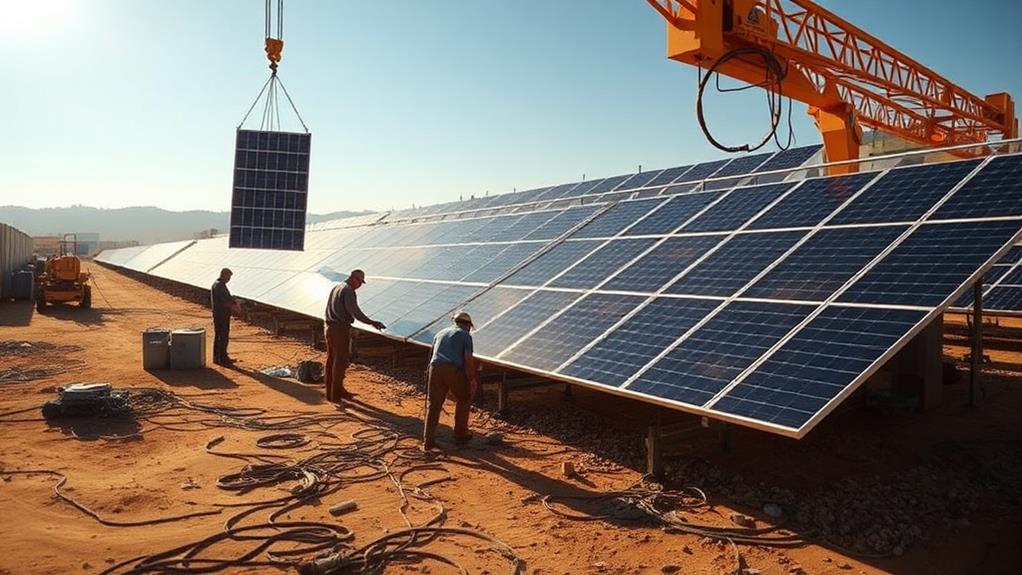
Addressing the installation and structural challenges of solar mounting systems requires precision to ensure safety and efficiency. Roofs must be capable of supporting the additional weight and wind load of solar panels. This often requires roof reinforcement to safeguard investments and enhance system performance. Reinforcing roofs helps optimise energy output, ensuring solar systems function at their best.
Professional inspection is crucial. Structural engineers assess roof integrity, advising on necessary repairs or reinforcements. This proactive measure not only ensures safety but also extends the lifespan of solar installations.
Shading from nearby structures or trees can significantly affect energy output. A comprehensive site assessment helps address such issues, maximising efficiency.
Collaboration between solar installers and electricians is essential. They ensure electrical systems can handle the solar load for seamless integration. A recommended product for effective collaboration is the SolarEdge Inverter, known for its efficiency and compatibility with various systems. Embracing this approach contributes to a more sustainable future.
Environmental and Weather Obstacles
Installation and structural challenges are crucial when addressing environmental and weather obstacles in solar mounting systems. Severe weather events such as high winds, hail, and lightning pose significant threats to solar panels. These conditions necessitate robust weatherproofing techniques and secure mounting solutions to ensure systems remain intact. Our sense of community and shared responsibility compels us to protect investments and sustain energy efficiency.
Wildlife management is vital for maintaining solar panel efficacy. Birds, insects, and even snails can create unexpected hurdles. Bird nesting and droppings dirty panels and reduce efficiency, necessitating regular inspections and cleaning. Insect activities and snail trails also lead to reduced performance, highlighting the importance of diligent maintenance.
Snow accumulation presents its own set of challenges. It hinders sunlight absorption and can damage panels. Effective snow removal techniques optimize performance and safeguard systems. Monitoring and addressing any strain installations place on roofing materials prevent leaks and structural issues. Overcoming these obstacles empowers us to power a brighter future.
Maintenance and Performance Concerns
Maintaining solar panel systems requires consistent attention to ensure optimal performance and energy output. Active maintenance of solar arrays is essential to keep them efficient and reliable. Regular cleaning is vital to remove dirt and debris from the panels.
Environmental factors, such as bird nests or insect activity, can significantly affect panel efficiency and must be monitored.
Weather challenges such as hail or high winds threaten systems. Using durable materials and ensuring secure mounting is of utmost importance. This protects both panel efficiency and system integrity, instilling confidence in the investment.
Electrical issues, like loose connections or inverter malfunctions, can lead to power loss or safety hazards. Professional installation and regular inspections are essential to maintain system integrity.
Security is crucial in protecting solar investments. Security measures, including alarms and barriers, help prevent theft, ensuring systems remain intact and operational. Through proactive maintenance and vigilance, solar systems can remain in peak condition.
For cleaning, consider using a product like the Kärcher K5 Pressure Washer, which effectively removes debris without damaging the panels. For secure mounting, the Renogy Solar Panel Mounting Z Bracket is highly recommended for its durability.
Conclusion
In dealing with solar mounting installations, we encounter a variety of challenges, like site assessment issues and environmental barriers. Meeting regulatory requirements and budget limits needs careful planning, while resolving technical design difficulties calls for expertise. Logistics problems can throw off schedules, and installation presents structural challenges. Weather conditions and maintenance issues are ongoing concerns. However, by remaining flexible and informed, we can tackle these challenges and fully utilise solar energy for a sustainable future.
If you have any questions about our products or services, please contact Deo Solar. We offer a range of products including Rail-Less Solar Brackets, End Spacers, Structural Brackets, Ground Mounted Solar Systems, Corrugated Brackets, and Earthing Plates. Our services include the DeoSizer Tool, Evaluation and Design, Maintenance and Support, and Solar Installations. We invite you to reach out to us for more information and assistance. Let's work together to advance solar energy solutions.