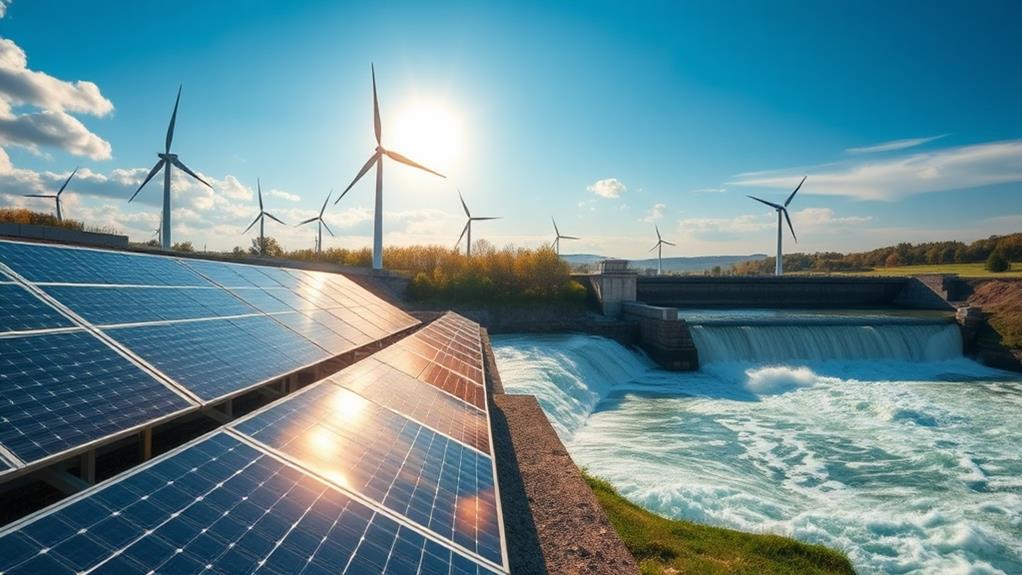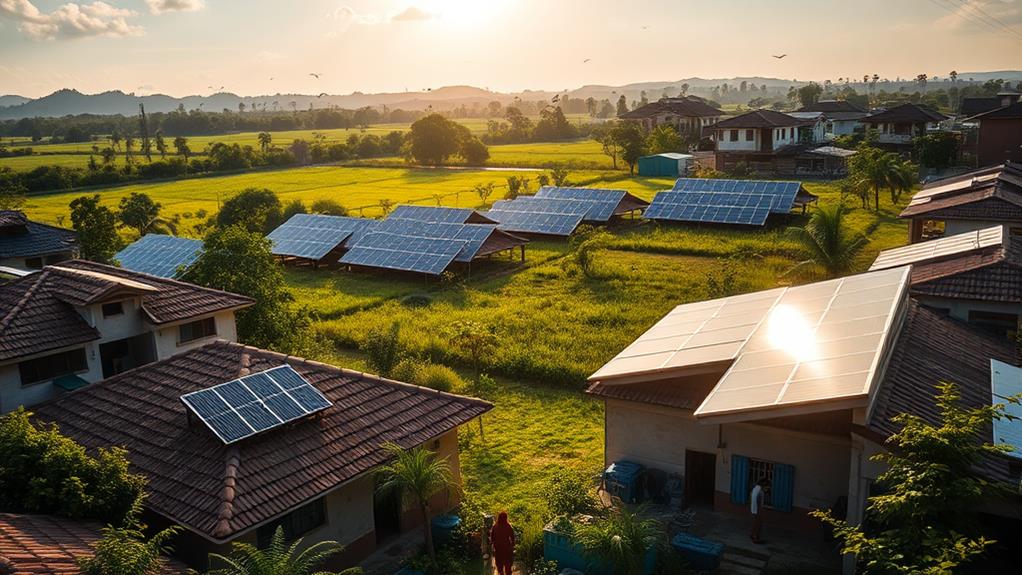


As we strive to create a sustainable energy future, community solar projects are emerging as a shining example.
These initiatives provide access to renewable energy, empowering low-income households to save up to £300 per year.
By alleviating energy poverty, community solar projects also improve public health outcomes, reducing air pollution and respiratory problems.
In addition, they stimulate local economies, creating jobs and promoting energy equity.
With governments offering incentives, community solar projects are becoming a lucrative option.
There's more to discover on how these projects can pave the way for a cleaner, more sustainable energy future – and we're just getting started.
Empowering Low-Income Communities
As we strive to create a more equitable energy landscape, community solar projects emerge as a powerful tool for empowering low-income communities, who've historically borne the brunt of environmental pollution and lacked access to clean energy options.
By providing access to renewable energy, we can promote energy literacy and community pride, enabling low-income households to take control of their energy costs and reduce their financial burdens.
For instance, community solar projects can save low-income households up to £300 per year, a significant amount that can make a tangible difference in their daily lives.
This is particularly important, as energy poverty is a significant issue in the UK, with many low-income households struggling to pay their energy bills.
By increasing access to renewable energy, we can alleviate energy poverty and foster a sense of community pride.
Moreover, empowering low-income communities is crucial for promoting energy equity and creating a more just and sustainable energy future that benefits everyone.
Improving Public Health Outcomes
We can significantly reduce air pollution and improve public health outcomes by leveraging community solar projects, which have been proven to decrease the amount of harmful fine particulate matter in the air.
This reduction is crucial because it can prevent thousands of premature deaths annually and alleviate the burden of asthma and other respiratory diseases that disproportionately affect low-income and minority communities.
The alarming health disparities in these communities make it imperative that we take control of our air quality.
Community solar projects can offset approximately 5 metric tons of carbon per year for each household, leading to improved air quality and reduced respiratory problems.
For instance, in California, community solar programmes have already shown impressive results, reducing greenhouse gas emissions by 77% and particulate matter emissions by 85%.
Economic Benefits of Solar Initiatives
By investing in community solar projects, local economies can experience significant growth, attracting new industries and creating jobs, which ultimately enhances our economic prospects.
The benefits of these initiatives are twofold: not only do they reduce our carbon footprint, but they also bring tangible economic benefits to our communities.
Community solar projects can propel our economy in several ways:
Job creation
The installation and maintenance of solar panels require skilled labourers, engineers, and technicians, thereby creating new job opportunities and stimulating local employment. For instance, a single solar farm can generate up to 200 jobs during the construction phase.
Tax incentives
Governments often offer tax breaks and incentives to encourage investment in renewable energy, reducing the financial burden on businesses and homeowners. For example, the UK government's Feed-in Tariff scheme provides a fixed rate for renewable energy producers, making it a lucrative option for investors.
Stimulating local economies
Overcoming Energy Inequality Barriers
While community solar projects bring economic benefits, they also have the potential to address a pressing issue: energy inequality.
It's crucial to acknowledge that not everyone has equal access to renewable energy, a significant obstacle to achieving a sustainable future. In fact, 49% of US households can't install rooftop solar due to various constraints, such as lack of suitable roof space or financial limitations.
Community solar programmes offer a solution, making solar energy accessible to low-income communities who need it most. By providing energy savings of up to 20%, these programmes can substantially reduce financial burdens for those who spend a large proportion of their income on energy bills.
Several states in the US have implemented programmes to promote community solar initiatives. For instance, New York's Community Solar Programme aims to achieve 1,000 MW by 2023.
Similarly, Illinois's Solar for All programme targets 2,000 MW by 2025, and New Jersey's Community Solar Programme aims for 3,000 MW by 2026.
A Sustainable Energy Future Ahead
As we gaze into the future, large-scale adoption of community solar projects is pivotal in crafting a sustainable energy landscape that benefits the entire spectrum of society.
It's not merely about mitigating our carbon footprint; it's about forging a future where energy is clean, affordable, and accessible to all, regardless of socio-economic background.
To achieve this, it's essential to invest in renewable infrastructure and implement policies that foster a sustainable energy future.
The implementation of carbon pricing, for instance, would provide a financial incentive for companies and individuals to transition to clean energy sources, thereby levelling the playing field for renewable energy.
By investing in community solar projects, we can bring clean energy to deprived communities, thereby reducing energy inequality.
Moreover, supporting renewable infrastructure can create jobs and stimulate local economies.
Take, for example, the UK's solar panel industry, which has created thousands of jobs nationwide.
Advocating for carbon pricing is crucial in creating a level playing field for clean energy sources, encouraging companies to switch to renewable energy.
It's high time we recognised the importance of a sustainable energy future that benefits everyone.