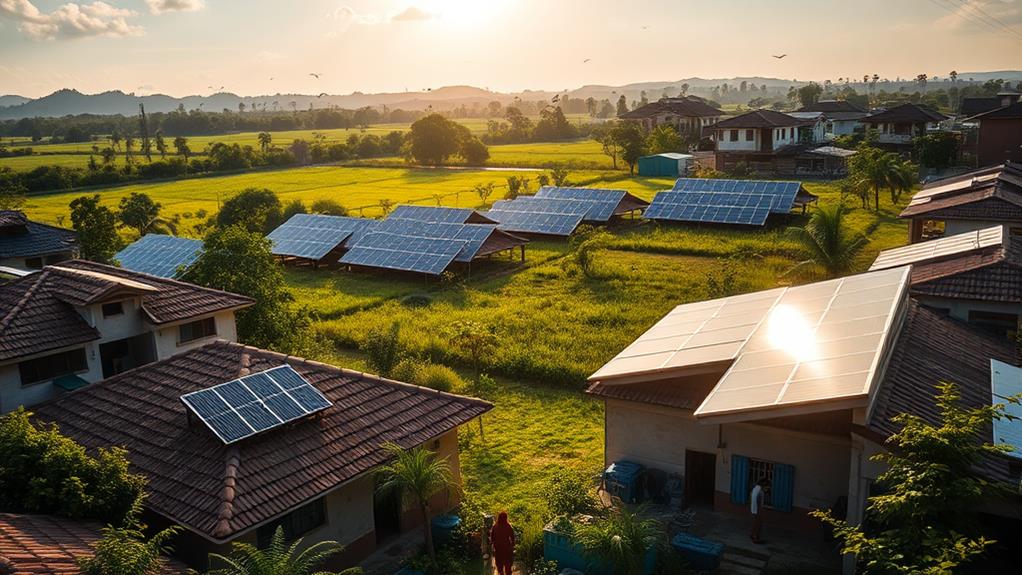


When we start the consultation process for solar installations, we need to have our electric bills ready to assess savings accurately. Let's analyze our energy needs and factor in any future home additions to make sure proper system sizing. Evaluating our property's roof orientation, tilt, and surrounding obstacles is essential for maximizing solar exposure. By reviewing detailed solar quotes, we can compare system specifications, warranties, and costs effectively. Exploring financing options like loans, tax credits, and net metering will help us decide the best fit for our financial situation. By grasping these elements, we're prepared to make well-informed decisions.
Key Takeaways
- Have your electric bill ready for accurate savings estimation during the consultation.
- Discuss your roof's condition, age, and material to assess solar panel suitability.
- Analyze your energy consumption patterns to determine the appropriate solar system size.
- Evaluate your property's sunlight exposure and roof orientation for optimal solar performance.
- Review solar quotes focusing on system size, costs, and warranty terms for informed decision-making.
Preparing for Your Consultation
When preparing for your solar consultation, having your electric bill handy is crucial to accurately estimate potential savings. Download your monthly utility bills for a detailed analysis of your energy usage. This enables us to discuss how solar panel installation might transform your home's energy profile. This step is essential in assessing your energy needs, ensuring we provide precise information for fair comparisons of quotes.
Consider any future additions to your home that could affect energy demands. Sharing these plans enables us to evaluate your solar potential more effectively and tailor recommendations to suit your lifestyle.
During the consultation, we'll address factors like your roof's condition, material, and age, as these influence the upfront costs and overall feasibility of solar installation.
We aim to approach this process openly and thoroughly. Understanding your roof orientation and other key factors allows us to optimise the design and placement of solar panels. With everything aligned, we work together to ensure you feel informed and confident about your transition to solar energy. This collaboration crafts a brighter, more sustainable future for us all.
Choosing products like LG Neon 2 panels or the SMA Sunny Boy inverter can enhance system efficiency. These options offer reliability and high performance, ensuring a seamless transition to renewable energy.
Understanding Your Energy Needs
Understanding your energy needs is the first step in designing a solar system that fits your lifestyle. In our community considering solar energy, knowing how we use energy daily is crucial. Analysing our energy consumption patterns determines the right solar energy system size and type for our homes. This involves looking at electricity bills to understand average monthly usage. It provides a clear picture of energy needs and potential savings when switching to solar.
Consider peak energy usage times. Knowing when energy use is highest helps tailor the solar system design to enhance energy production and savings. Factors such as the number of occupants, appliances, and heating or cooling systems all influence solar system sizing. Discussing future energy needs, like planned home additions, ensures the solar energy system remains efficient and effective over the long term.
To illustrate, if a household uses a lot of energy in the evenings, a battery storage solution like the Tesla Powerwall could be beneficial. It stores excess energy generated during the day for use at night, maximising savings.
Also, if a home has multiple occupants, a larger system with panels from reputable brands like LG or SunPower might be necessary to accommodate higher consumption levels.
Evaluating Property Suitability
Determining if a property is suitable for solar installation is essential for optimising energy efficiency and achieving savings. Key factors influence property suitability. Roof orientation and tilt angle are crucial. These elements ensure optimal solar exposure and energy production. A south-facing roof generally provides the best conditions for solar panel installation.
Nearby obstacles affecting sunlight exposure must be evaluated. Trees, buildings, or other structures can significantly impact energy generation. Identifying and addressing these challenges early is important.
Available roof space should be assessed to confirm it can accommodate the solar panels needed for an efficient installation.
Understanding energy consumption patterns is equally significant. This knowledge helps determine the size and design of the solar energy system tailored to our needs. Conducting a comprehensive sunlight exposure assessment confirms the property meets the requirements for a successful solar energy system design. This approach ensures our solar venture is both effective and satisfying.
Reviewing Solar Quotes
Evaluating the process of reviewing solar quotes enables us to make informed decisions regarding our solar installation. Examining the specifics ensures we obtain the best value and quality. Solar quotes should include details such as the system size, type of panels (e.g., monocrystalline or polycrystalline), inverter specifications, warranty terms, and installation costs. These components form the foundation of our decision-making process.
To fully comprehend what each company offers, comparing quotes side-by-side is essential. This comparison reveals variations in equipment quality and pricing. A transparent breakdown of costs is crucial. It's important to look for detailed information about installation, permits, equipment, and any additional services. Such clarity ensures accurate comparisons and helps assess the true worth.
Beyond figures, factors like system performance, warranties, and company reputation are significant. A reputable company offering high-performance systems with dependable warranties is invaluable. Examining these aspects connects us to a community that values informed choices and quality assurance.
For instance, consider a company like SunPower, known for its high-efficiency panels with a robust 25-year warranty.
Exploring Financing Options
After reviewing solar quotes and understanding what each company offers, we focus on financing options, which play a significant role in our solar journey. These options can make solar energy more affordable and accessible for everyone.
We consider solar loans, leases, and Power Purchase Agreements, each providing distinct avenues to ownership and savings. Government incentives like federal tax credits can considerably reduce initial installation costs.
Our enquiry also includes net metering programmes, allowing us to sell surplus energy back to the grid and earn credits that lower energy bills. This approach maximises the return on investment and enhances the long-term financial benefits of solar systems.
Let's not ignore the increased property value, a shared advantage.
Conclusion
As we guide you through the solar installation consultation, we aim to equip you with the necessary knowledge to make sound decisions. Together, we have assessed energy requirements, checked property suitability, reviewed quotes, and explored financing options. With this information, you are prepared to embark on a sustainable energy journey.
At Deo Solar, we are committed to supporting you every step of the way. We invite you to reach out to us with any questions or to learn more about our products: Rail-Less Solar Brackets, End Spacers, Structural Brackets, Ground Mounted Solar Systems, Corrugated Brackets, and Earthing Plates. We also offer services such as the DeoSizer Tool, Evaluation and Design, Maintenance and Support, and Solar Installations. Let us help you embrace the benefits of solar energy and work towards a cleaner environment.
Your solar journey starts here, and we're eager to assist you. Contact us at Deo Solar for more information and support.