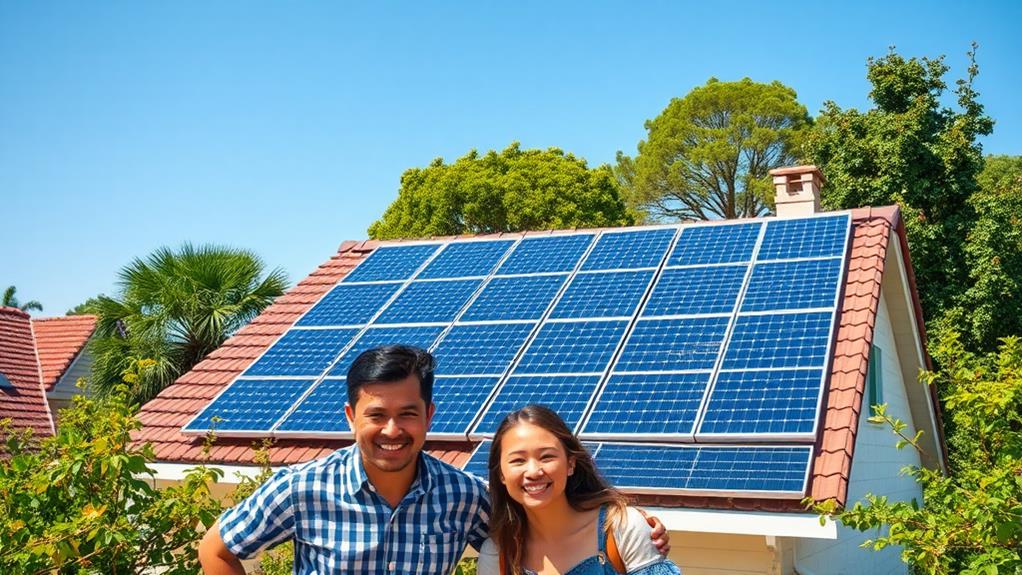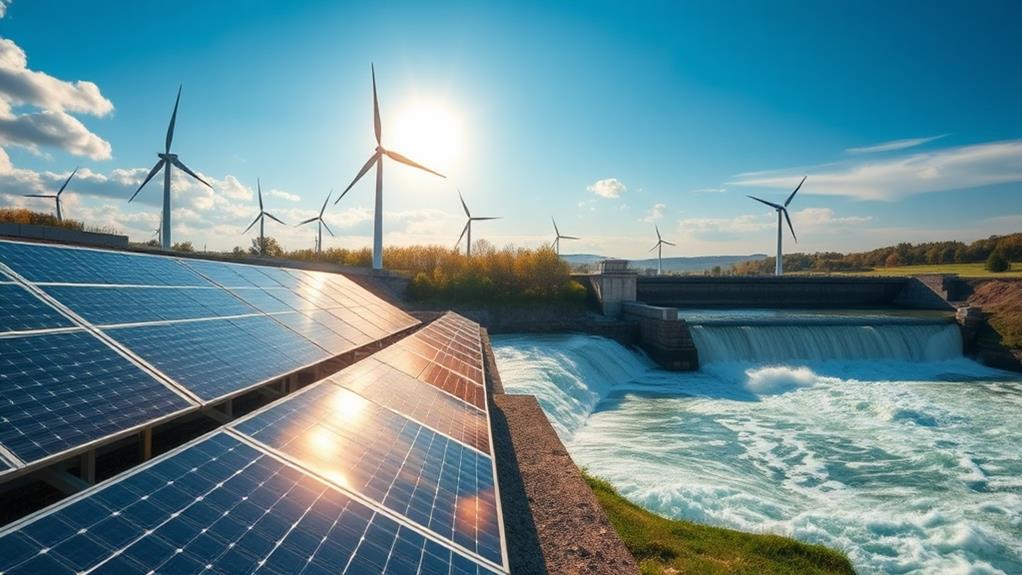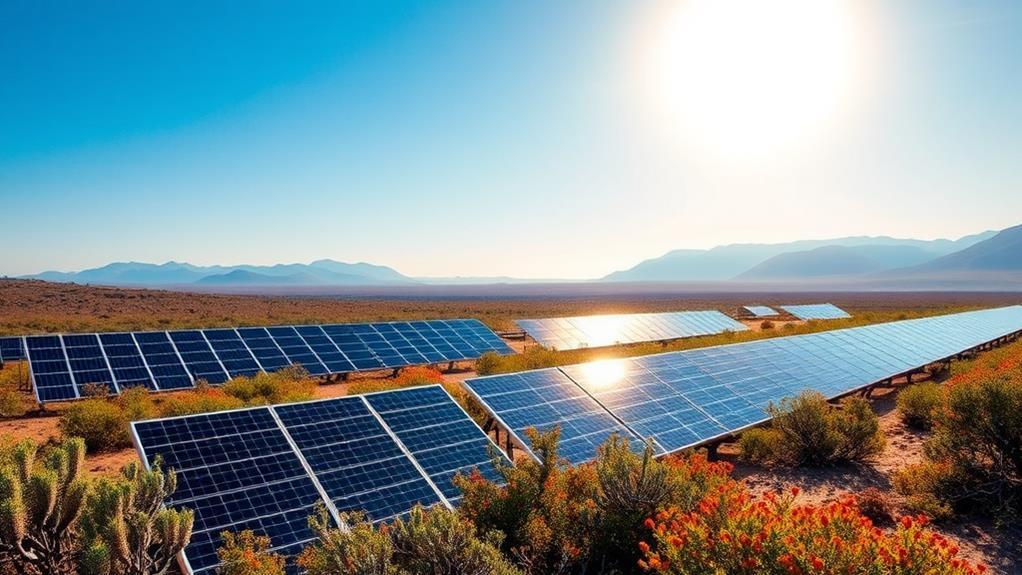


As South Africans, we are shifting towards solar energy to reduce our carbon footprint and alleviate climate change.
By adopting solar power, we can decrease our reliance on fossil fuels, reduce air pollutants, and conserve water. In fact, a typical residential solar panel system can reduce carbon emissions by approximately 3.5 tonnes per year.
By embracing renewable energy, we can pave the way for a low-carbon future, stimulating economic growth and creating new job opportunities.
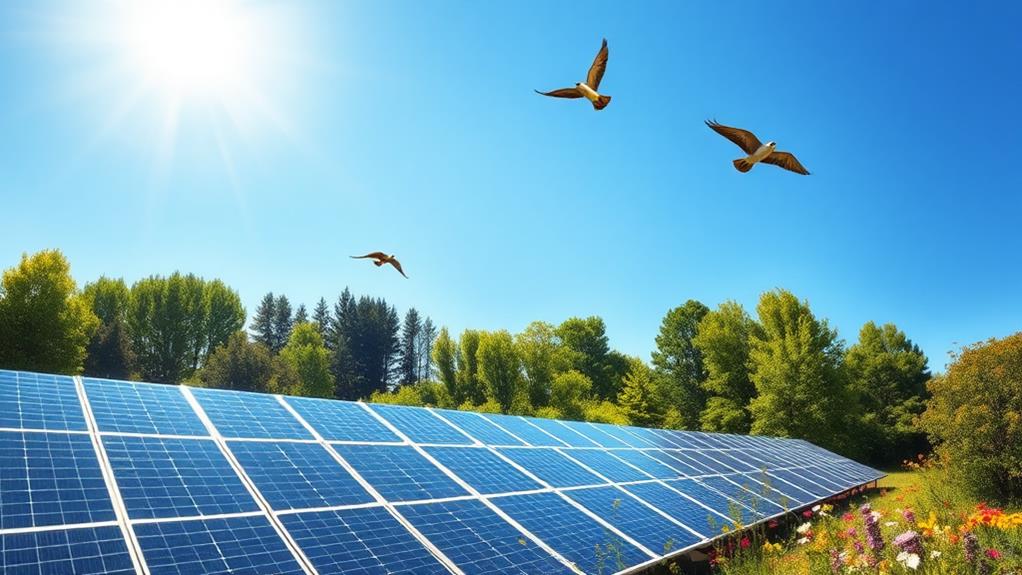
Moreover, solar farms can be designed to protect natural habitats and conserve wildlife, allowing us to make a positive impact on the environment while transitioning towards a sustainable energy sector.
Reducing Carbon Footprint
As we endeavour to diminish our carbon footprint, adopting a low-carbon future is crucial, and renewable energy sources, notably solar power, are playing a vital role in achieving this objective.
It's essential that we acknowledge our environmental accountability, and corporate responsibility is paramount. Implementing carbon pricing can motivate companies to reduce their emissions, a critical step since South Africa is the highest carbon emitter in Africa.
By investing in renewable energy, we can significantly decrease our reliance on fossil fuels, which currently account for over 50% of global primary energy utilisation. This shift not only reduces our carbon footprint but also generates new job opportunities and stimulates economic growth.
For instance, a study by the International Renewable Energy Agency found that the renewable energy sector already supports over 11 million jobs globally.
We must take control of our environmental future, and renewable energy is a fundamental step towards achieving a sustainable South Africa. By collaborating, we can make a substantial impact and ensure a cleaner, greener tomorrow.
Environmental Benefits of Solar
Environmental Benefits of Solar
As the world grapples with the challenges of climate change, solar power has emerged as a vital component in the quest to maintain ecological balance. The environmental benefits of solar energy are undeniable, and its significance in reducing our reliance on fossil fuels and promoting wildlife conservation can't be overstated.
Mitigating climate change through reduced greenhouse gas emissions
By opting for solar power, we can significantly decrease the amount of harmful pollutants emitted into the atmosphere, thereby slowing down global warming. For instance, a typical residential solar panel system can reduce carbon emissions by approximately 3.5 tonnes per year.
Conservation of finite natural resources
Harnessing the sun's energy helps reduce our dependence on finite resources, ensuring their availability for future generations. This is particularly crucial for fossil fuels, which are projected to deplete rapidly if consumption continues at current rates.
Preserving natural habitats and ecosystems
Solar farms can be thoughtfully designed to minimise land use and protect natural habitats, thereby conserving wildlife and their ecosystems. For example, the construction of solar farms with built-in wildlife corridors can facilitate the safe passage of endangered species.
Impact on Air and Water Quality
The environmental benefits of solar energy extend far beyond reducing our carbon footprint, as it also brings about significant improvements to air and water quality.
By adopting solar power, we can drastically decrease the emission of nitrogen oxides by up to 13,000 tons and sulfur dioxide by up to 22,000 tons per year, resulting in a substantial reduction in air pollutants.
This, in turn, can prevent up to 2,200 premature deaths and 11,000 cases of bronchitis annually.
Moreover, solar power reduces water usage by up to 72% compared to traditional power plants, which is crucial in water-scarce countries like South Africa.
The adoption of solar energy is, therefore, a vital step towards a healthier and more sustainable future.
Solar Energy's Climate Change Mitigation
As we delve into the environmental impact of solar energy, we're excited to discuss how it can help combat climate change.
By switching to solar power, we can substantially reduce our carbon footprint, slowing global warming and its devastating effects.
It's vital we take action, and solar energy can be a game-changer in this fight against climate change.
Reducing Carbon Emissions
By harnessing solar energy, South Africa can make a significant contribution to the global effort to mitigate climate change by substantially reducing its carbon footprint. As one of the top ten countries with the highest CO2 emissions, it's crucial that we take immediate action to reduce our reliance on fossil fuels. By transitioning from coal-based electricity to solar energy, we can ensure energy security while simultaneously reducing greenhouse gas emissions.
There are three key ways in which solar energy can help reduce carbon emissions:
Carbon pricing: Implementing a carbon pricing system can provide a financial incentive for companies to switch to renewable energy sources like solar, thereby reducing their carbon footprint. For instance, a carbon tax can encourage companies to invest in solar panels, reducing their reliance on fossil fuels and subsequently lowering emissions.
Emission standards: Setting emission standards for industries can encourage the adoption of clean energy sources, reducing the country's aggregate carbon footprint. For example, setting emission standards for the transportation sector can encourage the adoption of electric vehicles, reducing emissions and promoting a cleaner environment.
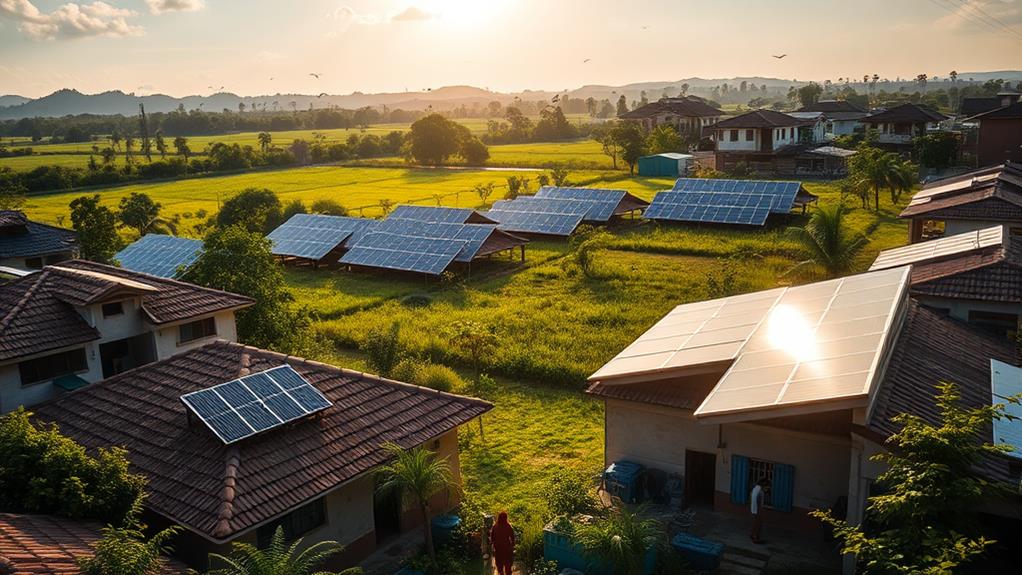
Increased accessibility: Solar energy can increase energy accessibility, particularly in rural areas, reducing the reliance on fossil fuels and lowering emissions. For instance, off-grid solar systems can provide energy to remote communities, reducing their reliance on diesel generators and subsequently lowering emissions.
Slowing Global Warming
We can mitigate the effects of global warming by harnessing the power of solar energy, which has the potential to significantly reduce climate change.
Transitioning to a low-carbon future allows us to reduce our reliance on fossil fuels, thereby lessening the devastating consequences of climate change.
In South Africa, solar energy is poised to play a vital role in achieving this goal, with plans to generate 20 gigawatts of solar power by 2050.
This ambitious target can help reduce the country's carbon emissions by up to 40 million tonnes, equivalent to removing 8 million cars from the road.
By investing in solar energy, we can create employment opportunities, stimulate local economies, and increase energy access, particularly in rural areas.
This not only strengthens climate resilience but also preserves our ecosystem.
As we strive to reduce our carbon footprint, solar energy emerges as a beacon of hope in the fight against global warming.
South Africa's Renewable Energy Future
South Africa is paving the way for a low-carbon future, with ambitious targets to reduce greenhouse gas emissions by 42% by 2025 and achieve net-zero emissions by 2050.
As we invest in renewable energy, we're reducing our reliance on fossil fuels and securing a stable energy supply for generations to come. This is crucial because it ensures energy security, which is vital for economic growth and development.
Three key benefits of renewable energy stand out.
Firstly, renewable energy investments will safeguard a stable energy supply, which is essential for powering homes, businesses, and industries. This, in turn, will drive economic growth and development.
Secondly, the growth of the renewable energy sector is expected to create new job opportunities and stimulate economic growth, with the sector already supporting over 24,000 jobs and contributing R4.5 billion to the economy. For instance, a study by the South African Wind Energy Association found that the wind energy sector alone created over 7,000 jobs in 2020.
Thirdly, the cost of renewable energy in South Africa has decreased dramatically in recent years, making it more competitive with fossil fuels. In fact, the cost of solar energy has dropped by over 70% in the last decade, making it a viable alternative to traditional energy sources.
Transitioning From Fossil Fuels
As South Africa transitions away from fossil fuels, the nation's energy landscape is poised for a significant transformation.
This shift is crucial for reducing greenhouse gas emissions and mitigating the environmental damage associated with fossil fuels.
Renewable energy sources, such as solar and wind power, are being invested in to decrease reliance on carbon-intensive energy.
The Just Energy Transition Investment Plan has allocated substantial funds to green hydrogen, electric vehicles, and electricity sectors, paving the way for a more democratic energy system.
This transition won't only reduce environmental impacts but also stimulate economic growth and create new job opportunities.
A Sustainable Energy Sector Ahead
As we look to build a sustainable energy sector, we're excited to investigate the key factors that will drive this transition.
We'll scrutinize how renewable energy growth can be accelerated, how energy storage solutions can overcome intermittency, and how strategic investments in green technology can supercharge our progress.
Renewable Energy Growth
As the world transitions to a low-carbon future, the renewable energy sector is poised for significant growth, driven by innovative technologies and forward-thinking policies. This shift is crucial, as it enables us to mitigate the impacts of climate change and create a more sustainable future.
The South African government has demonstrated its commitment to a low-carbon economy through initiatives like the Just Energy Transition Investment Plan (JET-IP), which allocates funds to green hydrogen, electric vehicles, and electricity sectors. This support is vital in driving investment and growth in the renewable energy sector.
Collaborations between government, industry, and civil society are essential for driving innovation and growth in the renewable energy sector. By working together, stakeholders can share knowledge, resources, and expertise, leading to more efficient and effective solutions.
The growth of the renewable energy sector is expected to create new job opportunities and stimulate economic growth, contributing to a sustainable energy sector. This, in turn, will improve energy security, reduce greenhouse gas emissions, and enhance energy access.
With an estimated 6 GW of wind energy available and solar energy being the most abundant resource, the potential for growth is substantial. By leveraging government support and strategic partnerships, we can harness this potential and achieve our goal of net-zero emissions by 2050.
Energy Storage Solutions
We are making significant strides towards a sustainable energy sector by harnessing the potential of energy storage solutions, a vital component in our transition towards a low-carbon future. With South Africa's energy storage market projected to reach £1.1 billion by 2025, we are on the cusp of a revolution. The government's target of 10,000 MW of energy storage capacity by 2030 will stabilise the grid and integrate intermittent renewable energy sources, ensuring a reduction in greenhouse gas emissions and mitigating the impact of climate change.
| Energy Storage Solution | Benefits | Impact |
|---|---|---|
| Lithium-ion batteries | Provides backup power, reduces diesel generator reliance, and offers a reliable alternative to traditional power sources | Supports rural electrification, reduces energy poverty, and enhances the quality of life for rural communities |
| Utility-scale battery storage | Integrates renewable energy into the grid, optimising energy distribution and reducing strain on the national grid | Strengthens energy security, reduces carbon emissions, and promotes a low-carbon economy |
| Off-grid energy storage | Offers energy access to remote communities, providing a reliable and sustainable source of energy | Addresses energy poverty, promotes rural development, and stimulates local economies |
As the cost of energy storage decreases, pioneering projects like Eskom and Nissan's partnership are becoming increasingly prevalent. By leveraging energy storage, we can mitigate our reliance on fossil fuels, combat energy poverty, and bring electricity to underserved communities. For instance, the use of lithium-ion batteries in off-grid energy storage can provide a reliable source of energy for rural communities, enhancing their overall quality of life. The future of energy is indeed bright, and we are excited to be a part of it.
Green Technology Investments
Investing in green technology is crucial for South Africa's transition to a low-carbon future, as it will create new job opportunities, stimulate economic growth, and increase energy accessibility.
The significance of green technology investments lies in their potential to reduce greenhouse gas emissions and mitigate the impact of climate change.
To achieve this vision, we must:
Utilise government incentives to attract private sector investment in renewable energy projects, such as wind farms and solar panels, thereby reducing reliance on fossil fuels.
Form strategic partnerships between private companies, research institutions, and government agencies to drive innovation, reduce costs, and improve the efficiency of renewable energy technologies.
Develop comprehensive skills training programs to equip the workforce with the necessary expertise to support the growing renewable energy sector, ensuring that South Africa has the requisite skills to install, maintain, and repair renewable energy infrastructure.