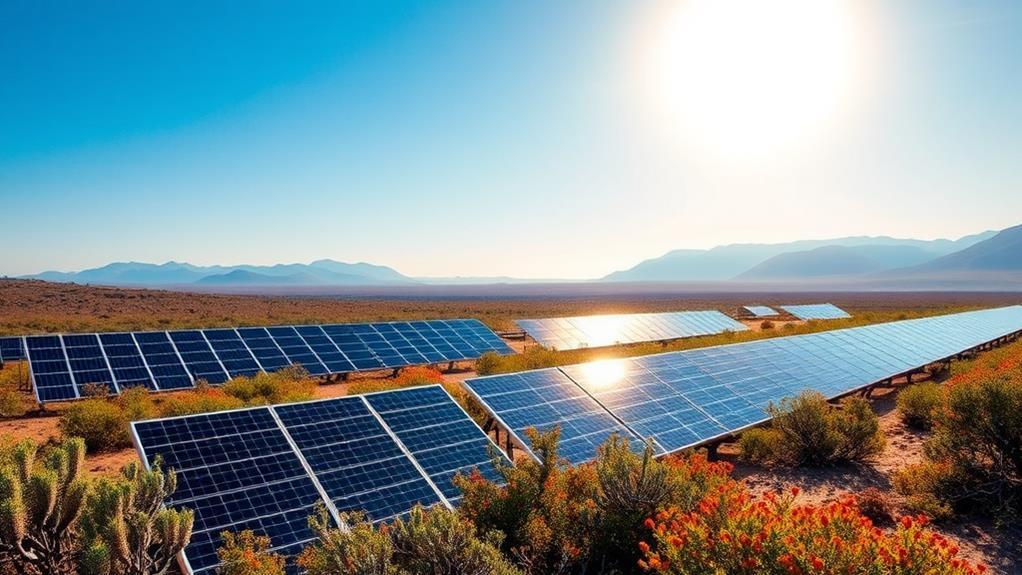


As we integrate more solar power into our energy grid, we must address its impact on grid stability in South Africa.
Solar energy's variable output affects frequency regulation, voltage management and power quality, which are critical components of a stable energy supply.
Advanced forecasting and control systems can alleviate these effects, while energy storage systems absorb excess energy during the day and release it during periods of high demand, reducing the strain on the grid.
By modernising our grid infrastructure and incorporating cutting-edge technologies, we can create a more robust and efficient energy system.
Enhancing Grid Stability With Solar
As we integrate a greater proportion of solar power into the national grid, clever system design and advanced forecasting are proving to be instrumental in enhancing grid stability, rather than compromising it.
This may seem counterintuitive, but the benefits are undeniable. By utilising solar forecasting, energy output can be predicted with a high degree of accuracy, enabling the grid to be adjusted accordingly.
This facilitates the provision of a stable electricity supply, even during periods of limited sunlight.
The modernisation of the grid is crucial to achieving this objective. Upgrading our infrastructure to accommodate solar power necessitates a comprehensive approach, incorporating cutting-edge technologies and data analytics.
By doing so, a more robust and efficient grid can be created, capable of adapting to fluctuating energy demands. The advantages are twofold: not only is our reliance on fossil fuels reduced, but a more stable and reliable energy system is also created.
This, in turn, has a positive impact on the environment and our finances. As we continue to push the boundaries of solar energy, we eagerly anticipate the significant positive impact it will have on our grid's stability and the future of our planet.
Solar Energy's Impact on Grid Reliability
As we investigate the impact of solar energy on grid reliability, we're faced with several vital aspects that require our attention.
We'll scrutinize how solar energy affects grid frequency regulation, voltage profile management, and power quality issues – all critical components that guarantee a stable and efficient energy supply.
Grid Frequency Regulation
The integration of solar energy into the South African grid necessitates careful management to mitigate the adverse impact of variable output on grid frequency regulation.
Failure to do so can lead to significant frequency fluctuations and instability. The grid's frequency regulation is particularly sensitive to solar power fluctuations, and if left unchecked, it can precipitate instability.
To counteract this impact, advanced forecasting and control systems are crucial.
For instance, solar farms can be required to provide short-term forecasting and real-time monitoring of their output, enabling grid operators to better manage frequency fluctuations.
The implementation of energy storage systems, such as batteries, can absorb excess energy during the day and release it during periods of high demand, thereby reducing the strain on the grid.
Furthermore, frequency response systems that can respond rapidly to changes in grid demand can help maintain grid stability.
Voltage Profile Management
Effective voltage profile management is crucial to prevent solar energy's variable output from causing voltage fluctuations that compromise grid reliability.
As the grid integrates more solar energy, maintaining a stable voltage range is vital to prevent equipment damage and power outages. For instance, the Council for Scientific and Industrial Research (CSIR) reveals that high solar penetration can cause voltage increases of up to 1.5% during peak hours, which can be detrimental if not managed properly.
To ensure grid resilience, optimising voltage levels within the recommended range of 0.95 to 1.05 per unit, as advised by the South African National Energy Development Institute (SANEDI), is essential.
By leveraging advanced weather forecasting and predictive analytics, we can anticipate and prepare for voltage fluctuations, enabling proactive voltage management. Furthermore, utilising smart inverters and advanced power electronics can provide real-time monitoring and control of voltage levels, allowing for more precise management of the voltage profile.
For example, the use of Siemens' Sicam Q2000 smart inverter can facilitate real-time voltage monitoring and control. By adopting these technologies, we can maintain a stable grid and guarantee a reliable supply of electricity for all.
Power Quality Issues
The integration of solar energy into the grid can trigger power quality issues, compromising grid reliability and stability. Weather patterns, such as cloud cover, can cause variability in solar energy output, resulting in voltage fluctuations, frequency deviations, and harmonic distortions that significantly impact grid resilience.
To mitigate these effects, advanced inverters can be employed to control voltage and current output, thereby minimising voltage fluctuations.
Energy storage systems can also be implemented to stabilise grid frequency.
Furthermore, filters and power conditioning equipment can be utilised to reduce harmonic distortions.
Mitigating Load Shedding With Solar
As South Africa's grid struggles to meet peak demand, solar power has emerged as a beacon of hope in mitigating the need for load shedding.
The frustration of sudden blackouts is all too familiar, with significant economic repercussions.
However, by harnessing solar energy, we can reduce our reliance on the grid during peak hours, thereby decreasing the likelihood of load shedding.
One of the primary benefits of solar energy is its ability to offset peak demand. For instance, by generating electricity locally, we can reduce the strain on the grid during hot summer afternoons when air conditioners and pool pumps are working overtime.
This, in turn, helps to flatten load patterns, making it easier for the grid to cope with demand.
By mitigating the need for load shedding, we can provide a more stable and reliable energy supply.
This is crucial, as load shedding can have devastating consequences on businesses and households alike.
By taking control of our energy future, we can build a more sustainable tomorrow, benefiting both the environment and the economy.
For example, installing a solar panel system, such as the SunPower X-Series Residential Solar Panels, can significantly reduce one's reliance on the grid.
Grid Stability Challenges and Solutions
Maintaining grid stability is crucial when integrating solar power into the energy mix.
The key challenge lies in the variability of solar radiation, which makes it difficult to predict and manage solar power output. This unpredictability can lead to fluctuations in the grid, making it challenging to maintain stability.
To address this issue, advanced weather forecasting and monitoring systems can help alleviate the impact of solar radiation variability on grid stability.
For instance, the UK's Met Office provides high-resolution weather forecasts that can help predict solar radiation patterns.
Energy storage devices, such as Tesla's Powerwall batteries, can also help stabilize the grid by storing excess energy generated during periods of high solar radiation and releasing it during periods of low radiation.
Moreover, sophisticated grid management systems, including real-time monitoring and control systems like Siemens' Spectrum Power, can aid in managing solar energy's fluctuation and maintaining grid stability.
The Role of Solar in Energy Security
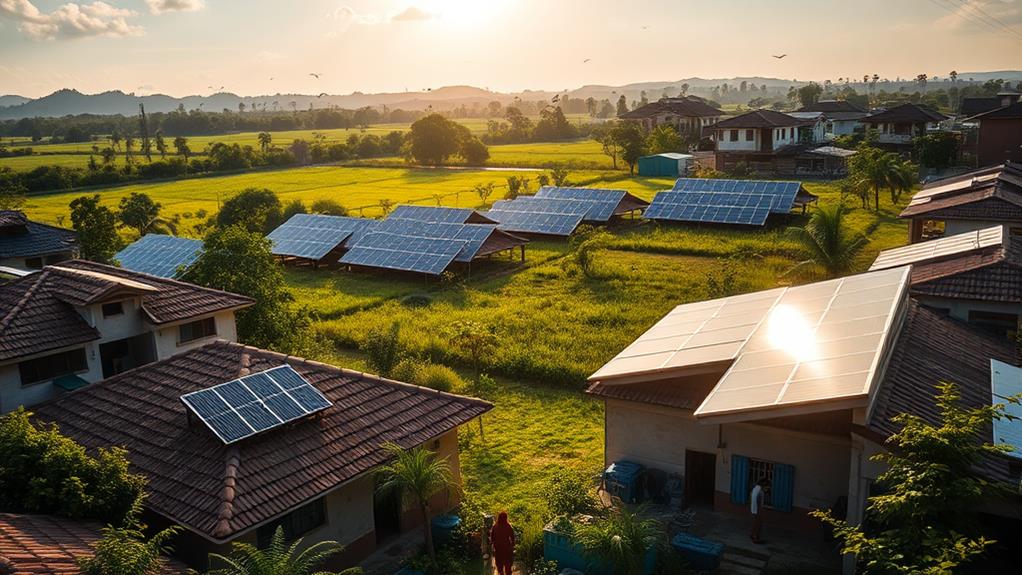
The decentralized and abundant nature of solar energy makes it an attractive component in enhancing energy security, particularly in remote or off-grid areas where traditional energy infrastructure is lacking.
By harnessing solar energy, we can power communities that have historically been off the grid, reducing reliance on fossil fuels and increasing energy independence. This is especially crucial in areas prone to natural disasters or conflict, where energy security is paramount to ensuring the well-being of communities.
For instance, in regions with frequent hurricanes or earthquakes, solar energy can provide a reliable source of power when traditional energy infrastructure is damaged.
However, the significant hurdle of energy storage remains a major obstacle to widespread adoption. To overcome this, a resilient policy framework is necessary to incentivize innovation in energy storage and promote the development of solar energy infrastructure.
For example, governments can provide subsidies for businesses and individuals investing in solar energy storage solutions, such as Tesla's Powerwall.
Solar Power and Grid Resilience
As we explore the relationship between solar power and grid resilience, we're faced with a few critical questions.
Can solar power systems provide grid support capabilities that enhance overall stability?
And how do they impact power quality, while also meeting the system flexibility needs required to ensure a reliable energy supply?
Grid Support Capabilities
Grid Support Capabilities in the Context of Solar Power and Grid Resilience
Solar power systems possess inherent grid support capabilities that significantly enhance grid resilience by regulating voltage, frequency, and power flow.
As we endeavour to modernise our grid infrastructure, integrating solar infrastructure is crucial to ensure a reliable and efficient power supply. The benefits of solar power in enhancing grid stability can't be overstated.
The integration of solar power systems into the grid offers several key advantages:
- Enhanced power quality: By regulating voltage and frequency, solar power systems can ensure a smoother power supply, reducing the likelihood of power outages and equipment damage.
- Improved grid stability: Solar power systems can help mitigate grid instability by providing real-time monitoring and control, thereby reducing the risk of power fluctuations and outages.
- Increased grid flexibility: With advanced weather forecasting and predictive analytics, solar power output can be optimised to meet changing grid demands, ensuring a more responsive and resilient grid.
Power Quality Impacts
We can significantly alleviate power quality issues by harnessing solar power's capacity to regulate voltage and frequency, thereby ensuring a more stable and reliable grid operation.
This is crucial, as solar fluctuations can cause voltage dips and frequency deviations, leading to equipment malfunction, reduced efficiency, and even grid instability. For instance, a sudden loss of solar power generation can cause voltage dips, resulting in equipment malfunction and reduced efficiency.
To mitigate these effects, it's essential to focus on grid coordination. This involves synchronising the solar power output with the grid's voltage and frequency.
By doing so, the solar power system can provide reactive power compensation, which helps to stabilise the grid voltage and frequency. This coordination enables the solar power system to adapt to changing grid conditions, ensuring a more stable and reliable operation. For example, a grid-tied inverter can be used to synchronise the solar power output with the grid, providing reactive power compensation and stabilising the grid voltage and frequency.
System Flexibility Needs
To ensure a stable and resilient grid, it's crucial to address the system flexibility needs that arise from integrating solar power into the South African grid. The integration of solar power poses unique challenges, including fluctuating output due to weather conditions, which can lead to grid frequency and voltage fluctuations. We must guarantee that our grid has the necessary flexibility to adapt to these changes, as this is essential for maintaining grid stability and preventing power outages.
To achieve this, we must focus on three key areas:
Scaling up grid infrastructure is vital to accommodate the integration of solar power. This includes upgrading transmission lines, substations, and distribution networks to ensure we've the capacity to absorb fluctuations in solar output. For instance, South Africa's state-owned power utility, Eskom, can invest in grid expansion projects, such as the Western Cape Grid Expansion Project, to increase the grid's capacity to absorb solar power.
Increasing energy storage is critical to respond to changes in solar power output. This can include implementing lithium-ion battery storage systems, such as those provided by companies like Tesla, to stabilise the grid during periods of high solar penetration. Energy storage solutions can help mitigate the impact of solar power fluctuations, ensuring a stable and reliable grid.
Improving forecasting and predictive analytics is essential to better plan and schedule generation. This can involve using advanced weather forecasting tools, such as those provided by companies like The Weather Company, to accurately predict solar power output. By doing so, we can counteract changes in solar power output and maintain grid stability.
Overcoming Grid Stability Concerns
By incorporating energy storage devices into the grid, we can mitigate the impact of solar energy's variability, ensuring a consistent and dependable power supply.
This is crucial in maintaining grid stability, where the grid's energy synchronisation isn't disrupted by the fluctuations in solar energy output.
The concerns about solar energy's unpredictability are well-founded, and utilities have raised legitimate concerns about its impact on the grid.
However, advanced technologies can counteract these effects. For instance, sophisticated grid management technologies, including real-time monitoring and control systems, can aid in managing solar energy's fluctuation.
Advanced weather forecasting can improve the accuracy of solar energy output predictions, ensuring that we're always one step ahead.
For example, companies like Open Energi and Limejump provide advanced weather forecasting and energy storage solutions to mitigate the impact of solar energy's variability.
By optimising energy distribution and reducing the strain on the grid, we can create a seamless and efficient energy system.
It's essential to take control of our energy future and ensure that our grid is stable, reliable, and harmonious.
Solar Energy and Grid Balancing
Solar energy's inherent variability, exacerbated by cloud cover and other weather conditions, poses significant challenges to grid balancing, as it can trigger voltage fluctuations and instability.
As the UK strives to increase its reliance on solar energy, it's crucial that our grids are equipped to handle the inherent fluctuations that come with it. This necessitates the modernisation of our grids, incorporating advanced forecasting and monitoring systems to predict and manage the variable output.
To achieve this, various strategies can be employed.
The integration of energy storage devices, such as batteries, to store excess energy during the day and release it during periods of low solar output, thus mitigating the impact of variability on the grid.
For instance, Tesla's Powerwall can provide up to 13.5 kWh of energy storage, helping to stabilise the grid during periods of low solar output.
The utilisation of sophisticated grid management technologies, including real-time monitoring and control systems, to manage solar energy's fluctuation and maintain grid stability.
Advanced software solutions, such as those offered by Siemens, can provide real-time monitoring and control capabilities, enabling grid operators to respond quickly to changes in solar energy output.
The leverage of advanced weather forecasting and predictive analytics to improve the accuracy of solar energy output predictions, enabling utilities and grid operators to better manage the integration of solar energy into the grid.
For example, companies like IBM and The Weather Company are developing advanced weather forecasting tools that can provide hyperlocal weather forecasts, enabling utilities to better predict and manage solar energy output.
Improving Grid Reliability With Solar
As we endeavour to integrate solar energy into the grid, it is essential to prioritise improving grid reliability to avoid equipment damage, interruptions, and power outages. The unpredictable nature of solar energy poses a significant challenge to grid stability, specifically when irradiance levels fluctuate. However, there are several strategies that can alleviate this issue.
| Strategy | Description |
|---|---|
| Energy Storage Systems | Store excess solar energy generated during periods of high irradiance for use during low output periods, such as during the night or on overcast days, thereby ensuring a stable energy supply. |
| Advanced Inverters | Utilise advanced inverters that can control the flow of solar energy onto the grid, regulating the voltage and frequency to ensure a stable and efficient supply. |
| Solar Forecasting | Employ advanced solar forecasting systems that predict solar energy output, enabling grid operators to maintain grid stability by adjusting energy distribution accordingly. |
| Grid Optimisation | Implement grid optimisation techniques that analyse energy distribution patterns, identifying areas of strain on the grid and optimising energy distribution to reduce the risk of power outages.
Solar's Contribution to Grid Stability
Solar's Contribution to Grid Stability
Integrating solar energy into the grid offers a significant advantage: it enhances grid stability. This is crucial because a stable grid is essential for reliable energy supply. We refer to this as Solar Certainties, which is vital for a stable grid.
By incorporating solar energy, we can reduce the strain on traditional power plants, creating a more balanced energy system.
Solar energy helps in several ways:
- Reduced peak demand: During hot summer afternoons, solar energy reduces peak demand, alleviating stress on the grid and preventing blackouts.
- Increased energy diversity: Adding solar energy to the mix creates Energy Synergies, promoting a more resilient grid that can withstand disruptions.
- Improved frequency regulation: Solar energy helps regulate grid frequency, ensuring the grid operates within a stable range, which is critical for preventing power outages.