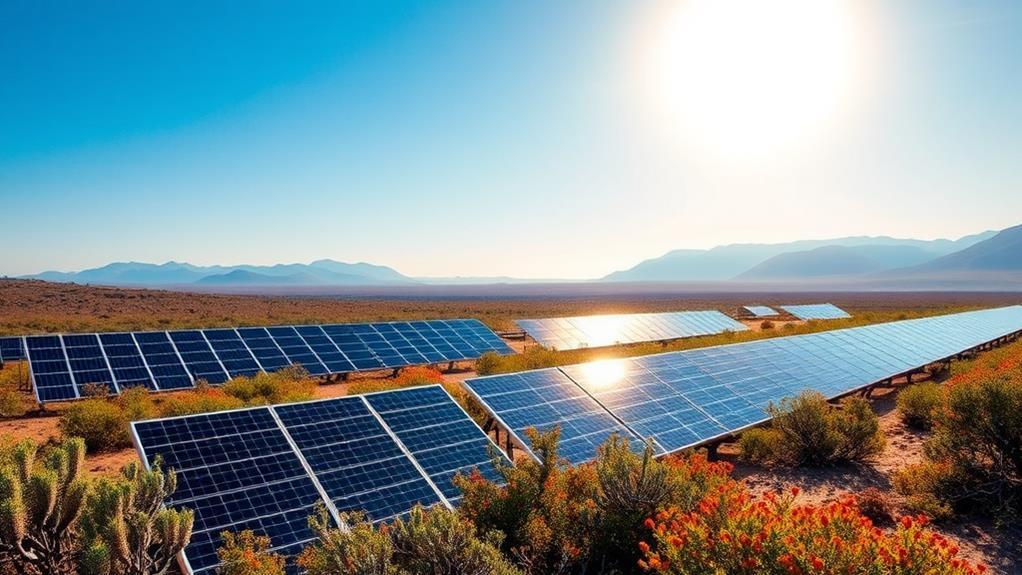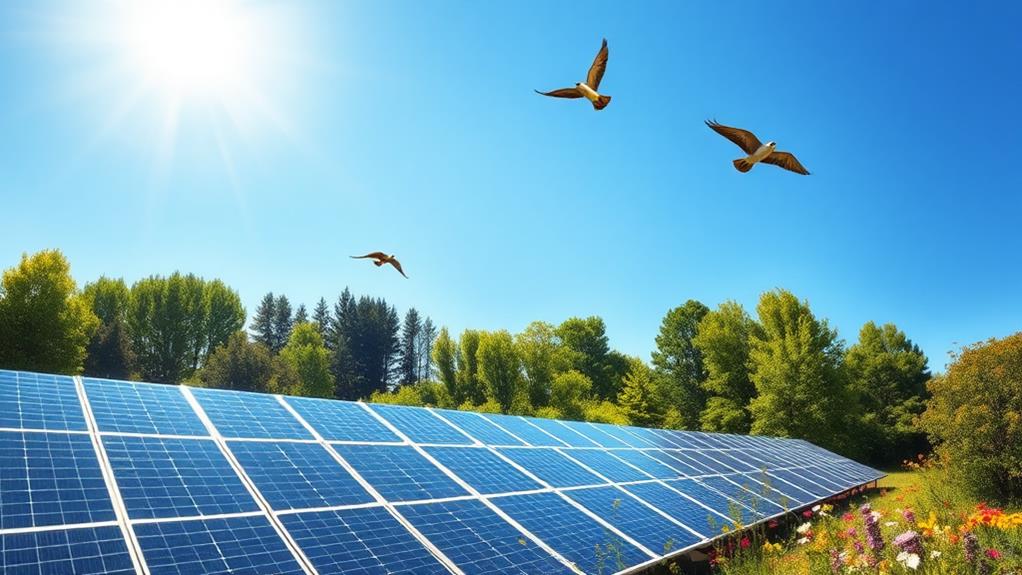


As we strive to revolutionise the way we cultivate food, we’re turning to a powerful ally: solar power.
By harnessing solar energy, we’re slashing energy costs, enhancing crop yields and mitigating climate change.
In Africa, solar-powered irrigation systems have increased crop yields by 50 per cent and reduced energy costs by 90 per cent.
Globally, solar power has led to a 30 per cent increase in crop yields while conserving water resources.
It’s transforming the way we farm, driving rural development and creating a brighter future for millions.
There’s more to discover in this innovative field – and we’re just getting started.
Harnessing Solar Energy for Agriculture
Harnessing solar energy for agriculture is a vital breakthrough, offering a cleaner, more sustainable alternative to traditional farming practices.
By integrating solar power into mainstream food production, we can significantly reduce our reliance on fossil fuels, thereby decreasing greenhouse gas emissions and mitigating climate change.
This shift towards solar farming is crucial, as it enables farmers to decrease their energy expenditure while increasing their energy independence.
Successful projects in India, the US, and Japan have demonstrated the feasibility and positive outcomes of solar-powered agriculture, showcasing its potential to drive rural development and alleviate poverty.
The adoption of solar energy in agriculture not only reduces energy costs but also creates job opportunities, improves food security, and stimulates local economies.
For instance, a solar-powered irrigation system can significantly reduce energy expenditure for farmers, allowing them to allocate more resources to improving crop yields and quality.
Moreover, solar-powered pumps can provide a reliable source of water, enabling farmers to irrigate their crops more efficiently.
As the world moves towards a more sustainable food system, it’s essential to recognize the vast potential of solar-powered agriculture.
Boosting Crop Yields With Solar
Boosting Crop Yields with Solar Power
The potential of solar power to revolutionise agriculture is being realised, as evidenced by the significant increase in crop yields. By harnessing solar energy, farmers can simultaneously boost their yields and reduce their environmental footprint. This is particularly crucial for farmers who rely on crop insurance to mitigate risks, as higher yields can lead to increased profits.
Solar power is elevating crop yields globally in various ways:
In India, solar-powered drip irrigation systems have resulted in up to a 30% increase in crop yields while conserving water resources. This innovative approach has enabled farmers to reduce their water consumption, a critical factor in regions prone to drought.
In the US, solar-powered aquaponics farms have demonstrated a 25% increase in crop yields while slashing energy costs by 50%. This sustainable approach hasn’t only reduced the environmental impact of farming but also decreased operational expenses.
Agrivoltaics, which combines solar energy production with agriculture, has been shown to increase crop yields by up to 15% due to the partial shade provided by the solar panels. This novel approach has enabled farmers to generate additional revenue streams while promoting eco-friendly farming practices.
In Japan, solar-powered vertical farming has enabled year-round production of crops, resulting in a staggering 300% increase in yields compared to traditional farming methods. This cutting-edge technology has transformed the agricultural landscape, enabling farmers to cultivate crops regardless of the season.
As we continue to develop innovative applications of solar power in agriculture, we can expect to see even more impressive results. By integrating solar power with farm robotics and other technologies, we can create more efficient, productive, and sustainable farming systems that benefit both farmers and the environment.
Solar Power in African Farms
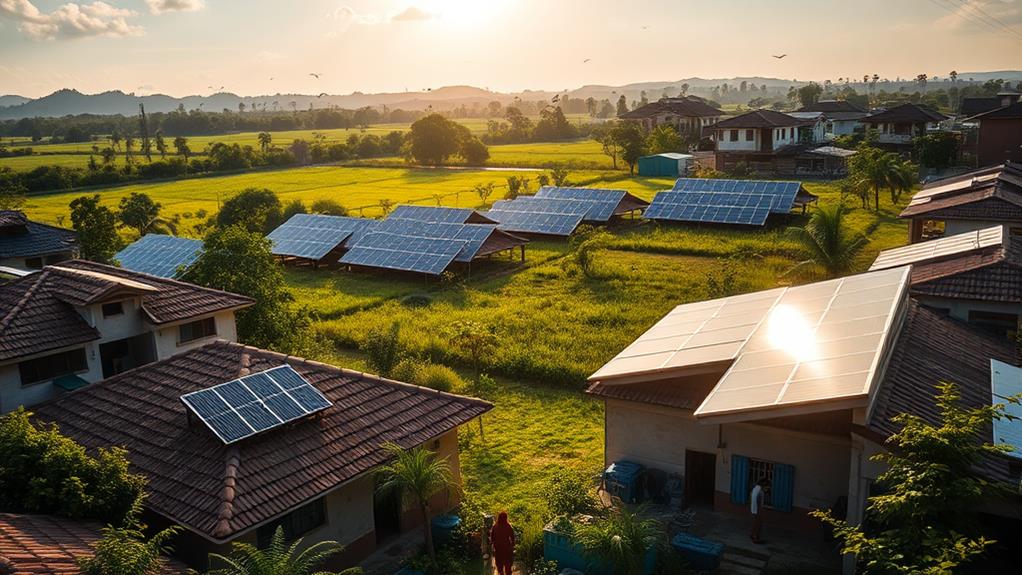
In Africa, where agriculture provides a vital source of income for millions, solar power is revolutionising the farming landscape, resulting in remarkable enhancements in crop yields and income for small-scale farmers.
The implementation of solar-powered irrigation systems, for instance, has led to a significant 50% increase in crop yields and a substantial 90% reduction in energy costs.
In Kenya, the adoption of solar-powered agriculture has been shown to increase farmers’ incomes by up to 30% and reduce post-harvest losses by up to 20%.
Similarly, in Ghana, a solar-powered farm utilising drip irrigation has reported a 40% increase in maize yields and a 30% reduction in water usage.
The African Development Bank’s $100 million investment in promoting solar-powered agriculture across 19 African countries underscores the potential for energy equity.
In Rwanda, a solar-powered agricultural project has created over 1,000 job opportunities and increased food production by 25% for rural farmers, demonstrating the transformative impact of solar energy on the agricultural sector.
As we continue to harness the power of solar energy, we’re creating a more sustainable and adaptable agricultural sector that benefits both farmers and communities.
Clean Energy for Rural Development
By leveraging the vast potential of solar power, rural development can be accelerated, and poverty alleviated, thereby creating a brighter future for millions of people worldwide. Clean energy is pivotal in unlocking this potential, and solar power is at the forefront.
For instance, solar-powered irrigation systems, as seen in India, can increase crop yields while conserving water resources. This, in turn, enhances food security, generates job opportunities, and reduces carbon emissions, ultimately leading to energy independence.
Rural Electrification: Solar power brings electricity to rural areas, providing power to homes, farms, and businesses, and connecting communities to the global economy. This is significant because it bridges the energy gap, fostering economic growth and social development.
Energy Equity: Solar power ensures everyone, regardless of their location or socioeconomic status, has access to clean energy, which is essential for bridging the energy gap.
Sustainable Development: By promoting sustainable agriculture, solar power reduces our reliance on fossil fuels, thereby mitigating climate change. For example, solar-powered water pumps can replace diesel-powered pumps, significantly reducing greenhouse gas emissions.
Empowerment: Solar power enables rural communities to take control of their energy needs, enhancing their economic and social well-being. This is crucial because it fosters self-sufficiency, reduces energy poverty, and promotes sustainable development.
Sustainable Farming With Solar Tech
As we strive towards a more sustainable future, solar-powered agriculture is transforming the way we cultivate our food, mitigating our dependence on fossil fuels and mitigating the effects of climate change. This paradigm shift towards sustainable farming practices prioritises soil conservation, promoting farm-to-table produce and reducing our ecological footprint. By integrating solar energy into agriculture, crop yields can be increased, water resources conserved, and energy expenditure reduced.
| Benefits | Description |
|---|---|
| Energy Independence | By harnessing solar energy, we can reduce our reliance on fossil fuels, a significant contributor to climate change |
| Increased Yields | Solar-powered irrigation systems, such as those using Lorentz pumps, increase crop yields and conserve water resources |
| Soil Conservation | Agrivoltaics, which involve integrating solar panels into agricultural landscapes, lower soil temperatures, enhancing crop performance and reducing soil erosion |
| Rural Development | Solar-powered agriculture can drive rural development, reduce poverty, and create opportunities for local communities