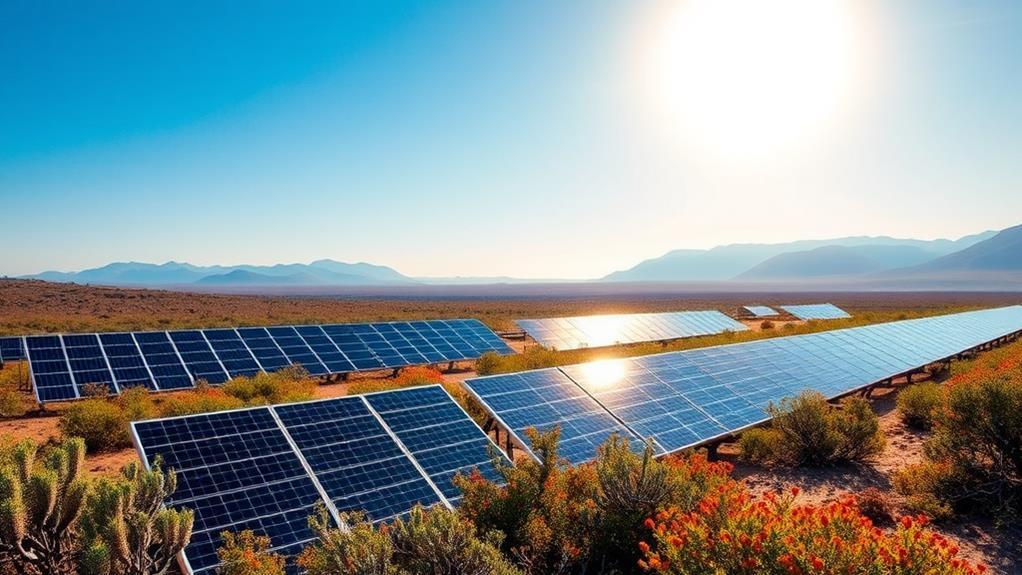


We’re on a mission to find the perfect solar solution, tailored to our unique energy needs and environment.
Firstly, we’re evaluating our energy usage by reviewing past electricity bills and conducting an energy audit to identify areas for improvement.
Next, we’re assessing our solar potential, considering factors like geographical location and sunlight distribution.
We’ll then explore financing options and government incentives to make the switch more affordable.
With so many considerations, we’re just getting started on this journey to harness the power of solar energy – and there’s more to discover.
Evaluating Your Energy Needs
Accurately evaluating our energy needs is crucial in selecting the ideal solar solution.
To achieve this, we must delve into our past electricity bills to determine our average monthly energy consumption. This vital step enables us to create an energy profile, outlining our energy usage patterns and habits.
By conducting a thorough energy audit, we can identify areas of inefficiency and opportunities for improvement. Factors such as the number of people in our household, energy-hungry appliances like refrigerators and air conditioners, and our geographical location are all considered to gain a comprehensive picture of our energy requirements.
This information enables us to calculate the required solar system size, ensuring we install a system that can generate sufficient electricity.
Understanding our energy needs allows us to make informed decisions about our solar solution, optimize our energy usage, and amplify the benefits of our solar investment. By taking control of our energy needs, we’re one step closer to harnessing the power of solar energy and achieving our sustainability goals.
Assessing Solar Potential in SA
As we delve into the world of solar energy, we’re excited to assess the solar potential in South Africa.
We’ll start by looking at the country’s solar climate, which is characterized by high levels of solar radiation throughout the year.
South Africa’s Solar Climate
South Africa boasts an impressive average annual solar irradiance of approximately 2,500 hours, making it an ideal location for harnessing solar energy.
The country’s diverse geography, comprising varying latitudes and altitudes, creates a fascinating climate variability. This variability significantly affects the distribution of sunlight throughout the year, making it essential to understand these patterns when selecting a solar solution.
The sunrise patterns in South Africa are a prime example of this variability. Due to its position in the time zone, the eastern coast receives sunlight earlier than the western coast.
As a result, areas such as Durban and the Eastern Cape experience sunrise earlier, while the Western Cape and surrounding areas experience a later sunrise.
Recognizing these patterns is crucial in optimizing solar solutions, as it enables the maximization of energy production and minimization of energy losses.
Solar Radiation Patterns
Understanding solar radiation patterns is crucial when evaluating the feasibility of solar energy projects in South Africa, as they significantly impact the effectiveness of solar solutions. Recognising where the sun shines brightest and most consistently is vital, as it enables the identification of areas ideal for harnessing solar energy through solar mapping.
In South Africa, the western parts of the Northern Cape and Free State receive the highest levels of solar radiation, with daily averages ranging from 7-8 kWh/m². In contrast, the eastern regions, including KwaZulu-Natal and the Eastern Cape, receive lower levels, around 5-6 kWh/m² per day. Climate variability also plays a significant role, with factors like cloud cover, aerosols, and time of year affecting radiation levels.
Understanding Financing Options
With a multitude of financing options available, you can select the one that best suits your budget and lifestyle, making the transition to solar energy more accessible than ever.
The upfront cost of installing solar panels is no longer a significant obstacle, thanks to financing options like solar loans that offer favourable terms and interest rates, allowing you to spread the system cost over several years.
This makes solar energy a more attractive option for a broader range of consumers.
Moreover, government incentives, such as rebates and net metering programmes, can substantially reduce the upfront cost of adopting solar energy.
Leasing and power purchase agreements (PPAs) enable you to install solar panels with little to no upfront cost, providing a low-risk and affordable way to adopt solar energy.
Additionally, options like property assessed clean energy (PACE) financing allow you to finance your solar panel system through your property taxes, providing a low-interest, long-term financing solution.
With so many financing options available, you can take control of your energy costs and start saving money today.
Choosing the Right System Size
Now that we’ve got our financing options sorted, it’s time to think about the nitty-gritty of choosing the right system size for our solar panel setup.
To get started, we’ll need to assess our energy needs, determine the ideal system capacity, and optimize the panel layout to guarantee we’re getting the most out of our investment.
Assessing Energy Needs
To accurately assess our energy needs, it’s crucial to calculate our average daily energy consumption in watt-hours (Wh) by reviewing our past electricity bills and considering factors like household occupants and energy-intensive appliances.
This process is vital in determining the right solar system size for our homes, as an incorrectly sized system can lead to inefficient energy production and financial losses.
By conducting an energy audit, we can identify areas where we can reduce our energy consumption, making our solar system more efficient and environmentally friendly.
Our consumption patterns play a significant role in this assessment, as they help us understand our energy usage habits and pinpoint areas for improvement.
For instance, if we’ve energy-intensive appliances, such as powerful computers or multiple refrigerators, we may need a larger solar system to meet our energy needs.
By considering these factors, we can make informed decisions about our solar system size.
The UK’s Microgeneration Certification Scheme (MCS) provides a useful calculator to estimate the required solar system size based on our energy consumption patterns and available roof space.
Determining System Capacity
Determining the right system capacity for our solar panel system is crucial as it directly impacts the amount of energy we generate. To achieve this, we must consider various factors, including our energy consumption, roof size and orientation, and local building codes. This ensures we maximise our solar solution’s potential.
Typically, a residential system ranges from 3 to 10 kilowatts (kW), but we need to tailor it to our specific needs.
A system size calculator is a valuable tool in determining the required capacity. It takes into account variables such as energy usage, roof size, and local solar irradiance.
For instance, the average British home requires a 4-5 kW solar panel system to meet its energy needs. However, homes vary, and we may need a system capacity of 3-5 kW for small to medium-sized homes or up to 10 kW or more for larger homes or those with high energy demands.
Accurately determining our system capacity is vital to ensure we generate the right amount of energy for our needs, while also considering the unique conditions of our location. This is particularly important in the UK, where sunlight hours are limited, making every kilowatt count.
Optimizing Panel Layout
Optimizing panel layout is crucial in maximizing energy production from our solar solution. To achieve this, we need to ensure our panels are installed at the optimal angle and spacing to generate the maximum amount of electricity possible.
Proper panel angle and spacing guarantee a higher energy yield. For instance, a 30-40 degree angle is often ideal, although a latitude-matched angle ± 15 degrees can be equally effective. In terms of row spacing, 2-3 inches is a suitable distance to allow for efficient energy production.
| Panel Angle | Row Spacing |
|---|---|
| 30-40 degrees | 2-3 inches |
| Latitude-matched angle ± 15 degrees | 2-3 inches |
| 30-40 degrees (for most homes) | 2-3 inches |
In optimizing panel layout, it’s essential to consider these factors to ensure maximum energy production.
Selecting a Reputable Installer
When selecting a solar panel installer, it’s essential to scrutinise their credentials and reputation to ensure a reliable and efficient installation that meets our specific needs.
A reputable installer will provide a tailored assessment of our home and system requirements, taking into account our energy usage and roof layout. For instance, they’ll consider the size and orientation of our roof, as well as any potential shading issues, to recommend the most suitable system for our property.
To guarantee a high-quality installation, we must verify that our chosen installer has the necessary certifications, such as the Microgeneration Certification Scheme (MCS) and the Renewable Energy Consumer Code (RECC), which ensure they meet industry standards.
This is vital because it gives us peace of mind that our system will be installed correctly and safely. Moreover, we should check online reviews and request multiple quotes to compare prices and services offered by different installers. This enables us to make an informed decision and find the best value for our money.
Furthermore, it’s essential to verify the installer’s warranty and maintenance services to guarantee long-term support and system efficiency. A reputable installer will provide a comprehensive warranty that covers the system’s performance and components, as well as maintenance services to ensure our system operates at its optimal level.
Navigating SA Regulations
Navigating SA Regulations
By understanding the complex regulatory landscape in South Australia, homeowners and businesses can maximise the benefits of solar energy.
Comprehending the rules and regulations governing our energy grid is crucial for optimising the advantages of solar power.
The Australian Energy Market Operator (AEMO) maintains AEMO Compliance, ensuring a stable supply of electricity.
The South Australian Government‘s ambitious target of 50% renewable energy by 2025 has driven growth in the solar industry.
This growth is made possible by the Clean Energy Council‘s (CEC) accreditation of solar installers and systems, providing assurance of quality.
The Australian Government’s Small-scale Renewable Energy Scheme (SRES) offers a financial incentive for households and small businesses to adopt solar energy.
Furthermore, the South Australian Government’s Retailer Reliability Obligation (RRO) scheme promotes local energy generation, including rooftop solar.
Understanding these regulations enables the creation of an Energy Policy that benefits everyone.
With a clear comprehension of these regulations, we can unlock the full potential of solar energy and take control of our energy future.
Considering Energy Storage Options
Considering Energy Storage Options
When we generate more solar power during the day than we need, a crucial question arises: what do we do with the excess energy? One of the most popular solutions is energy storage. Energy storage systems, such as batteries, enable us to store excess energy generated during the day for use during the night or on cloudy days.
| Energy Storage Option | Benefits |
|---|---|
| Grid Tie System | Sell excess energy back to the grid and receive credits, which can offset electricity bills |
| Hybrid System | Combines the benefits of grid tie and battery backup systems, offering maximum flexibility and energy independence |
| Off-Grid System | Provides complete energy independence, making it ideal for remote locations or areas with frequent power outages |
| Battery Backup System | Ensures power supply during outages and grid instability, safeguarding critical appliances like refrigerators and medical equipment |
| Load Shifting System | Shifts non-essential loads to off-peak hours, resulting in significant cost savings and reduced strain on the grid |
When selecting an energy storage option, it is crucial to consider key factors such as grid resilience and battery durability. For instance, a high-quality battery like the Tesla Powerwall can provide up to 13.5 kWh of energy storage capacity. By choosing the right system, we can ensure a reliable and efficient energy supply that meets our unique needs.
Maximizing Your Solar Savings
To maximize your solar savings, it’s essential to consider several key factors that can significantly impact your energy production and overall return on investment.
Firstly, it’s crucial to determine the correct size and type of solar panel system for your needs. A system that’s too small will fail to generate sufficient electricity, while an oversized system will be more expensive than necessary.
When assessing your roof’s suitability, a south-facing orientation with minimal shading is ideal, as this can enhance energy production by up to 15%. Additionally, installing panels at an angle of 15 to 30 degrees can optimize energy production. High-efficiency solar panels with a rating above 20% can generate more electricity per hour of sunlight, leading to greater savings on your energy bills.
To further optimize your solar savings, it’s essential to reduce your total energy consumption. You can achieve this by implementing energy-efficient appliances and lighting, such as LED bulbs, which can help you reap the benefits of your solar panel system more quickly.
By monitoring your energy usage and production through energy monitoring systems, you can identify areas for improvement and increase your solar benefits. For instance, you can use energy monitoring systems like SolarEdge or Enphase to track your energy production and consumption.
With these factors in mind, you can optimize your solar savings and enjoy the financial and environmental perks of going solar.
Maintaining Your Solar System
Regular maintenance is crucial to ensure your solar system operates at optimal levels, thereby preventing unexpected repairs and costly downtime. A well-planned maintenance schedule helps identify potential issues before they escalate into major problems.
Begin by conducting a thorough system inspection to identify any damage or wear and tear on your panels and equipment. Monitor performance data to confirm your system is producing at its best.
By addressing issues early, you can avoid costly repairs and optimise your energy savings. Furthermore, a well-maintained system will last longer, reducing the need for premature replacements.
For instance, inspect your panels regularly to ensure they’re free from debris, dirt, or vegetation. Clean them periodically to maintain their efficiency. Invest in a reliable monitoring system to track your energy production and identify any anomalies.