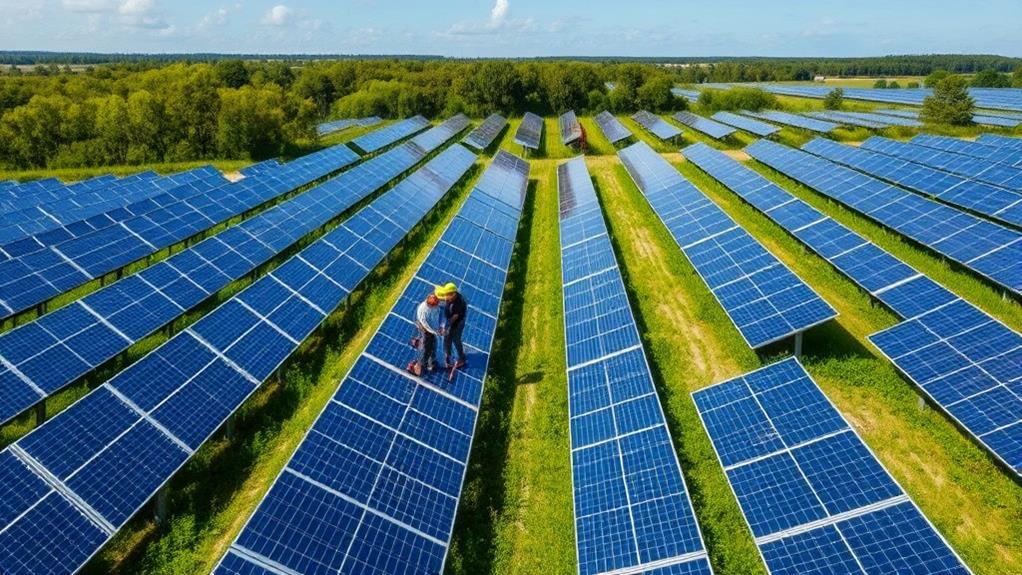


Switching to solar energy is one of the most impactful steps we can take to reduce our carbon footprint. Solar panels dramatically cut CO2 emissions—over 100 tonnes per panel—and produce electricity without releasing harmful pollutants, unlike fossil fuels. They don't require water, conserving precious resources, and outshine crops like corn in efficiency and environmental benefit. By transitioning to solar power, we contribute to a cleaner, more sustainable planet. These benefits aren't just theoretical; they're already being realized in solar initiatives worldwide. Let's investigate how solar energy not only lessens emissions but also supports a more sustainable lifestyle.
Key Takeaways
- Solar panels reduce over 100 tonnes of CO2 emissions per panel, significantly lowering carbon footprints.
- Solar energy generates electricity without harmful emissions, unlike fossil fuels, making it eco-friendly.
- Solar projects on degraded land ensure minimal environmental impact while efficiently reducing CO2 emissions.
- Transitioning to solar power decreases reliance on fossil fuels, reducing the likelihood of environmental hazards.
- Solar energy production conserves vital water resources, promoting sustainability and reducing carbon footprints.
Environmental Impact of Solar Energy
When considering methods to reduce our carbon footprint, solar power stands out as an effective solution. As a community aiming for a sustainable future, solar energy technologies are crucial in reducing greenhouse gas emissions and addressing climate change. Embracing these renewable energy sources allows us to significantly lessen our environmental impact. Solar energy not only offers a cleaner alternative, but also outperforms traditional methods such as forests in counteracting CO2 emissions. In reality, solar panels can reduce 208 to 236 times more CO2 than an acre of forest each year.
The environmental benefits of solar energy production go beyond carbon reduction. Situating solar projects on degraded land ensures minimal environmental impact, making solar energy a genuinely eco-friendly choice. This practice utilises land that might otherwise be disregarded, transforming it into a hub of clean energy production.
Additionally, with solar panels generating 394 to 447 MWh per acre annually, they prove far more efficient than crops like corn for ethanol in reducing our carbon footprint.
As we adopt solar energy, we actively contribute to a cleaner, more sustainable planet for future generations. For instance, considering the installation of the LG NeON 2 solar panels can be an excellent choice for residential use due to their high efficiency and reliability.
Solar Panels and Carbon Reduction
Examining the role of solar energy in reducing our carbon footprint, solar panels are at the forefront of this effort. Harnessing the sun's power, we can significantly decrease CO2 emissions; each solar panel reduces over 100 tonnes of emissions. This contributes substantially to carbon reduction. Unlike fossil fuels, solar energy production generates electricity without harmful emissions, offering environmental benefits without adding to greenhouse gases.
The impact of solar panels becomes more apparent when considering their efficiency compared to coal-fired power stations, which emit over 16 times more CO2. This stark contrast highlights the necessity of embracing renewable energy sources.
Furthermore, solar panels function without water usage, conserving vital water resources and promoting sustainability—an essential factor in minimizing our carbon footprint.
Comparing Solar to Fossil Fuels
Solar energy offers significant hope in our efforts to reduce our carbon footprint and tackle climate change. As a renewable resource, it starkly contrasts with fossil fuels, notorious for their high greenhouse gas emissions and environmental harm.
Coal-fired power stations, for example, emit over 16 times more carbon dioxide than solar power. Solar panels, on the other hand, generate electricity without emissions, making them a crucial tool in addressing air pollution and climate change.
Embracing solar energy allows us to lower our carbon footprint substantially. Choosing solar panels means opting for a cleaner, more sustainable approach to meeting energy demands. Fossil fuels require water for generation, while solar energy does not, conserving vital resources and minimizing environmental impacts.
Transitioning to solar power also reduces our reliance on oil, decreasing the likelihood of devastating oil spills that damage marine ecosystems. Adopting solar energy aligns us with a community dedicated to protecting our planet for future generations. Solar panels from companies like SolarEdge and SunPower are excellent choices for households looking to make this transition. Let's commit to renewable energy sources over fossil fuels, fostering a cleaner, healthier world.
Solar Energy's Role in Sustainability
We must acknowledge solar energy's crucial role in fostering a sustainable future. It serves as a beacon of hope in our effort to reduce our carbon footprint. A single solar panel can offset more than 100 tonnes of CO2 emissions, significantly impacting our environment. Embracing solar energy contributes to a cleaner planet, easing the burden on our atmosphere.
Solar energy not only reduces emissions but also enhances grid resilience and provides reliable energy. When coupled with solar batteries, such systems ensure a steady power supply, even when the sun isn't shining. Unlike many traditional power sources, this energy solution doesn't depend on water resources, conserving our vital water reserves.
Globally, there's a collective shift towards clean energy, with governments, organisations, and individuals advocating for solar initiatives. The future appears promising with expanding utility-scale projects and community-focused rooftop installations. These efforts provide clean energy and encourage community involvement and teamwork.
Innovative solutions, such as solar batteries, ensure a sustainable energy supply. For instance, the Tesla Powerwall is an option for domestic use, storing solar energy for later use. Together, we can harness solar energy to build a more sustainable, inclusive future for all.
Solar Solutions for South Africa
How can South Africa significantly reduce its carbon footprint? Embracing solar energy is a promising solution. Transitioning to solar energy can effectively decrease carbon emissions and combat climate change. South Africa's commitment to increasing renewable energy capacity is crucial to meeting renewable energy targets and reducing reliance on coal-fired power stations. This collective effort can lead to a cleaner future.
Solar energy provides a robust tool for transforming the energy landscape. Integrating more solar power projects contributes to a cleaner energy mix and significantly lowers greenhouse gas emissions. This change not only reduces the carbon footprint but also fosters community spirit as people work together towards sustainability.
One practical example is the installation of rooftop solar panels in homes and businesses. Solar panels such as the Canadian Solar CS6K-290P, known for its durability and efficiency, can be a great choice.
Additionally, solar water heaters can reduce energy consumption in households. Products like the Solahart 302L solar water heater offer an efficient and environmentally friendly alternative.
Solar farms are another impactful solution. The De Aar Solar Power project in the Northern Cape is a testament to large-scale solar energy potential, generating enough electricity to power thousands of homes. Investing in solar batteries, such as the Tesla Powerwall, can store energy efficiently, ensuring a reliable power supply even on cloudy days.
Government incentives and tax rebates can further encourage the adoption of solar solutions, making it more accessible for everyone. By choosing solar energy, South Africa can reduce its carbon footprint and pave the way for a sustainable future.
Conclusion
In our journey towards a sustainable future, solar energy plays a crucial role. Deo Solar is at the forefront of this change, providing innovative solar solutions. By using solar panels, we can significantly cut down on our carbon emissions compared to fossil fuels. They are not merely an alternative; they are a powerful tool in our efforts to combat climate change. As we continue to develop and implement solar technologies, particularly in areas like South Africa, we are not only protecting our environment but also creating a cleaner, brighter future.
If you have any questions about our products, such as Rail-Less Solar Brackets, End Spacers, Structural Brackets, Ground Mounted Solar Systems, Corrugated Brackets, and Earthing Plates, or our services, including the DeoSizer Tool, Evaluation and Design, Maintenance and Support, and Solar Installations, please do not hesitate to get in touch with us. We invite you to contact Deo Solar for more information.