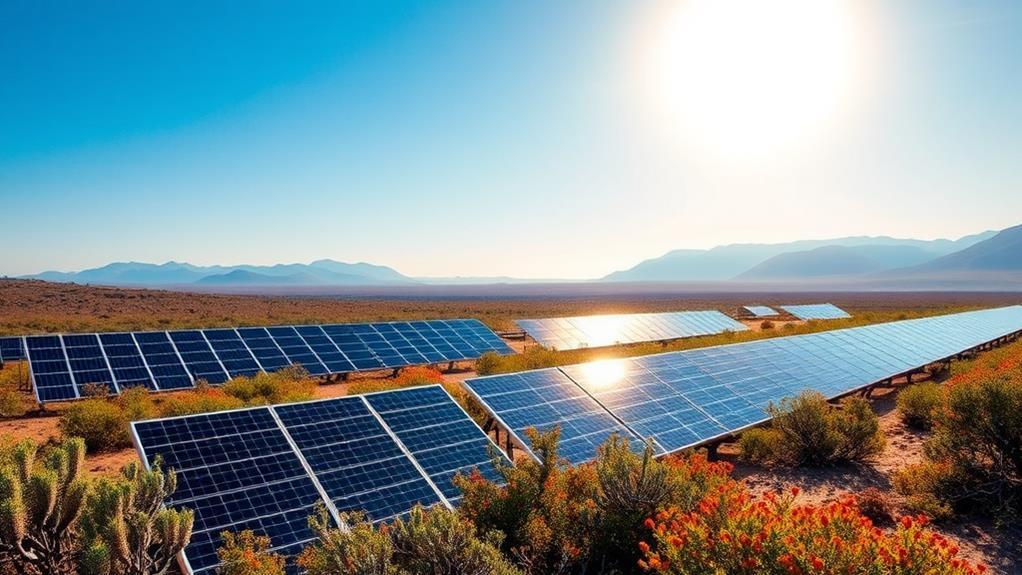


By switching to solar water heating, we can slash our energy consumption by up to 50% and substantially reduce our reliance on non-renewable energy sources.
This innovative solution allows us to conserve water, reduce our carbon footprint, and create a more sustainable tomorrow.
We can save up to R10 000 per year on energy bills, and potentially earn up to R11 400 per year through the Government’s Renewable Heat Incentive scheme.
What Is Solar Water Heating?
We take hot water for granted, yet it’s a vital component of our daily lives.
Traditional water heating methods, however, are inefficient and contribute to our reliance on non-renewable energy sources. This not only wastes energy but also exacerbates water scarcity, a pressing global concern.
By harnessing the sun’s power, solar water heating offers a sustainable alternative, reducing our energy consumption and alleviating the strain on our planet’s resources. This eco-friendly solution is crucial for energy security, allowing us to break free from fossil fuels and take control of our energy future.
By adopting solar water heating, we can conserve water, reduce our carbon footprint, and create a more sustainable tomorrow.
For instance, installing a solar water heater can reduce energy consumption by up to 50%, significantly decreasing our reliance on non-renewable energy sources.
Moreover, solar water heaters like the SunQuest 20 Tube Solar Water Heater are designed to provide a steady supply of hot water, making them an ideal solution for households and commercial establishments alike.
How Solar Water Heating Works
As we delve into how solar water heating works, we’ll take a closer look at the system’s components and the heat transfer process that makes it all possible.
We’ll scrutinize the solar collectors, the fluid that flows through the circuit, and how it heats the water in the storage tank.
System Components Overview
Harnessing the sun’s energy to heat water necessitates a well-designed system comprising several critical components that work together seamlessly. Understanding the system’s anatomy is crucial as we delve into the world of solar water heating.
A typical setup consists of solar collectors, a storage tank, a heat exchanger, and a backup heating system. Each component plays a vital role in the system design.
Solar collectors, typically mounted on rooftops, absorb sunlight and convert it into heat. For instance, the Kingspan Solar Collector is an excellent option, offering high-efficiency heat transfer.
This heat is then transferred to the storage tank, where it’s stored for later use. The heat exchanger ensures efficient heat transfer between the solar loop and the storage tank, facilitating seamless integration.
In instances where the sun’s energy is insufficient, the backup heating system kicks in, guaranteeing a steady supply of hot water.
By grasping how these components work together, we can appreciate the innovative design of solar water heating and the benefits it brings to our daily lives.
For example, a well-designed system can provide up to 60% of a household’s hot water requirements, significantly reducing energy bills.
Heat Transfer Process
Now that we’ve examined the system components, let’s delve into the heat transfer process that enables solar water heating.
This process is crucial for harnessing the sun’s energy and providing a reliable source of hot water.
A fluid mixture of water and antifreeze circulates through the solar collectors, absorbing heat from the sun due to the collectors’ dark-colored materials designed to optimize heat absorption and minimize heat loss.
On a sunny day, the fluid temperature can reach up to 200°F (93°C), allowing for efficient heat transfer.
The heated fluid then circulates through a heat exchanger, typically a coil or tube, which enables safe and efficient heat transfer to the water in the tank.
By optimizing the heat transfer process, we can enjoy a reliable and sustainable source of hot water while reducing our energy bills and carbon footprint.
For instance, using a high-efficiency heat exchanger like the Brazed Plate Heat Exchanger can improve the overall performance of the system.
Costs and Financial Support
We typically spend around £3,000 to £5,000 upfront to install a domestic solar water heating system, but the long-term savings can be substantial. The Government’s Renewable Heat Incentive (RHI) scheme provides significant financial support, enabling homeowners to earn up to £475 per year for up to 7 years, which helps offset the initial installation cost.
A breakdown of the costs and benefits is as follows:
| Cost/Benefit | Amount | Duration |
|---|---|---|
| Installation Cost | £3,000 – £5,000 | One-time payment |
| Annual Savings | £360 | Ongoing |
| RHI Earnings | £186 – £475 | Up to 7 years |
| Total Savings | £1,005 | Ongoing |
| System Lifespan | 20+ years | Long-term |
The RHI scheme rewards homeowners using low-carbon heating systems, with a tariff for solar thermal panels of 21.36 p/kWh. Although the initial installation cost may seem high, it’s a cost-effective solution in the long run, as solar water heating systems are designed to provide roughly half of the hot water requirement. This significant contribution to hot water needs makes the system a worthwhile investment, especially when considering the long-term savings and RHI earnings.
Energy Savings and Benefits
By switching to solar water heating, households can reduce their energy bills by £355 to £380 per year, depending on their current heating system and hot water usage.
This significant reduction in energy costs is due to the ability of a well-designed solar water heating system to provide up to 70% of hot water needs, thereby reducing reliance on traditional fossil fuels.
Furthermore, by harnessing solar energy, households can lower their carbon footprint by saving between 30 kg and 510 kg of CO2 per year, contributing to a more sustainable lifestyle.
In addition to energy savings, solar water heating also promotes water conservation.
By utilising solar energy, households can reduce water waste and conserve this precious resource.
What’s more, solar water heating systems can provide hot water throughout the year, even on cloudy days, making them a reliable and consistent source of energy.
With financial incentives available, such as grants and tax credits, investing in solar water heating is a prudent decision for both the environment and one’s wallet.
Choosing the Right System
When selecting a solar water heating system, it’s essential to consider several key factors to ensure the right fit for your household’s unique needs and preferences.
First, determine the correct system sizing for your home by examining your hot water demands, household size, and the amount of sunlight your roof receives. A system that’s undersized will fail to meet your hot water needs, resulting in inadequate supply, while an oversized system will be a waste of money.
It is crucial to choose the correct type of system, deciding between a direct circulation system or an indirect one. Direct circulation systems, for instance, are suitable for mild climates, whereas indirect systems are more suited for colder climates.
Furthermore, it’s vital to seek installation tips from certified professionals to ensure your system is installed correctly and efficiently. A correctly installed system can provide significant savings on energy bills and reduce your carbon footprint.
Installation and Maintenance
Our solar water heating system is now operational, and to ensure it continues to provide hot water efficiently and safely, regular maintenance is crucial. Failure to do so may result in reduced performance, safety issues, and even system failure.
Regular inspections are vital to confirm the system operates at its best. Fortunately, maintenance is relatively straightforward. We need to check the pressure gauge regularly to verify it’s within the recommended range, typically between 1-3 bar.
Every five years, we’ll need to replace the heat transfer fluid to maintain the system’s performance. Additionally, we should schedule a full service every five to seven years, which involves draining and flushing the system and replacing the fluid. This is essential to prevent corrosion and maintain the system’s integrity.
It’s essential to follow our installer’s guidance for maintenance checks to ensure the system operates safely and efficiently. Leaving professional maintenance checks to a qualified installer is vital to prevent leaks and confirm the system is functioning correctly.
System Efficiency and Performance
As we delve into the world of solar water heating, we’re now going to investigate a vital aspect: system efficiency and performance.
We want to get the most out of our solar water heating systems, and that means optimizing heat gain and minimizing energy loss.
Heat Gain Optimization
Optimising heat gain is crucial in enhancing the efficiency and performance of our solar water heating system, thereby increasing the total energy output.
The primary objective is to maximise the energy absorbed from the sun and convert it into usable heat.
To achieve this, it’s essential to consider the thermal mass of our system. Thermal mass, which refers to a material’s ability to absorb and release heat energy, plays a vital role in our system’s efficiency.
Incorporating materials with high thermal mass, such as concrete or brick, into our system enables it to absorb heat during the day and release it at night, thereby increasing its overall efficiency.
Furthermore, implementing effective insulation strategies is crucial in minimising heat loss.
This can be achieved by using high-quality insulation materials, such as foam board or Kingspan insulation, to line our pipes and tanks.
By reducing heat loss, we can ensure that the energy gained from the sun isn’t wasted.
For instance, using a well-insulated tank, such as a Kingspan hot water cylinder, can reduce heat loss by up to 90%.
Energy Loss Reduction
Boosting the efficiency and performance of our solar water heating system requires identifying and addressing energy losses throughout the system.
This is crucial because it enables us to take measures to minimize these losses and optimize the system’s overall performance.
One vital area to focus on is insulation, as it plays a critical role in preventing heat from escaping from pipes and storage tanks.
Verifying that these components are well-insulated is essential, as it helps reduce energy losses.
The choice of pipe material is also significant, as some materials are more prone to heat loss than others.
For instance, copper pipes are a more efficient option than PVC pipes due to their higher thermal conductivity.
By selecting the right materials and insulation strategies, we can drastically reduce energy losses and enjoy a more efficient system.
To further minimize heat loss, measures such as pipe lagging and tank wrapping can be implemented.
These steps can significantly optimize the system’s performance, reduce energy bills, and provide a more sustainable and eco-friendly way of heating water.
Environmental Impact and Carbon Footprint
Our reliance on traditional water heating systems significantly contributes to greenhouse gas emissions, making the switch to solar water heating a vital step in reducing our carbon footprint. As responsible individuals, we must acknowledge the urgent need to address climate change and adopt eco-friendly practices to mitigate its devastating effects.
| Benefit | Impact |
|---|---|
| Reduces carbon emissions | 30 kg to 510 kg per year, equivalent to a 1.5-tonne reduction in carbon emissions annually |
| Saves on energy bills | £355 to £380 annually, resulting in significant long-term savings |
| Lowers carbon footprint | Noticeably lower than traditional heating systems, with some solar water heaters reducing carbon emissions by up to 75% |
| Carbon payback period | Around 2 years, enabling homeowners to reap the environmental benefits quickly |
| Contributes to sustainable living | Reduces reliance on fossil fuels, promoting a cleaner, healthier environment for future generations
Comparing Solar Water Heaters
When choosing a solar water heater, it’s crucial to consider factors such as system size, collector type, and storage capacity to ensure the system meets our hot water demands.
A thorough comparison of different systems and brands is vital to finding the perfect match. Evaluating factors like efficiency, durability, and maintenance requirements helps us make an informed decision.
To avoid feeling overwhelmed, we should identify our specific needs and budget to narrow down our options. Assessing brands is also essential, as some manufacturers offer better warranties, customer support, and overall value.
We should look for brands that provide detailed system comparisons, making it easier to choose the best fit for our home. For instance, brands like Vaillant and Worcester Bosch offer a range of solar water heaters with varying capacities and efficiencies.
By investing time in researching and comparing different solar water heaters, we can be confident in making a smart investment for our future.
With the right system, we can enjoy significant energy savings and a reduced carbon footprint. For example, a well-designed solar water heater can save up to 50% of our water heating energy consumption, resulting in substantial cost savings over time.
Maximizing Energy Efficiency
Optimising our solar water heating system is crucial to unleash its full energy-saving potential, thereby reducing our energy consumption and leading to lower utility bills. To achieve this, we must prioritise system optimisation and energy monitoring. This involves ensuring our system is correctly sized, installed, and maintained to prevent energy losses. For instance, using the right collector type for our climate is vital. The table below illustrates the suitability of different collector types for various climates:
| Collector Type | SEF Value | Climate Suitability |
|---|---|---|
| Flat Plate | 1.5 | Warm climates |
| Evacuated Tube | 2.5 | Cold climates |
| Hybrid | 2.0 | All climates |